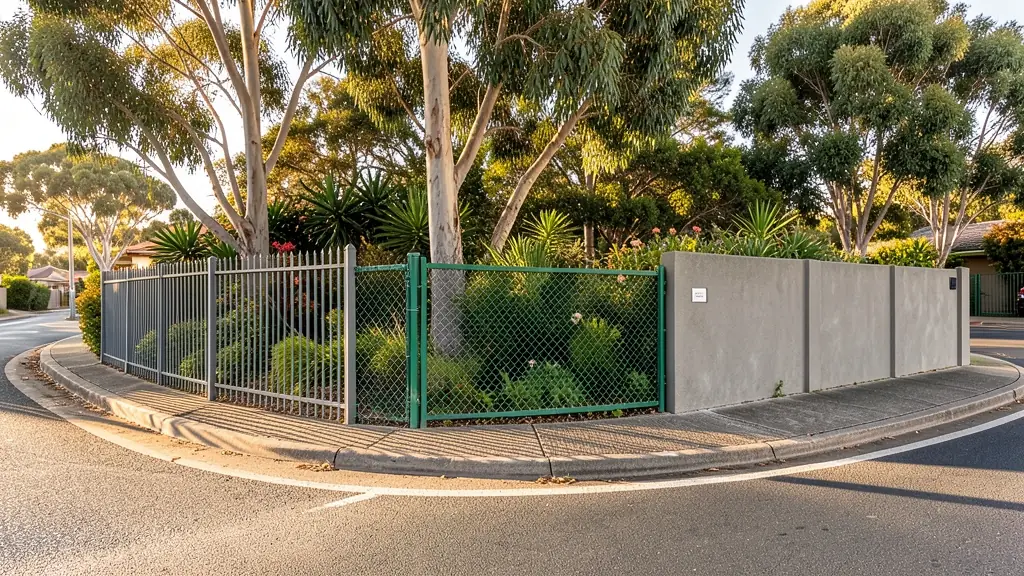
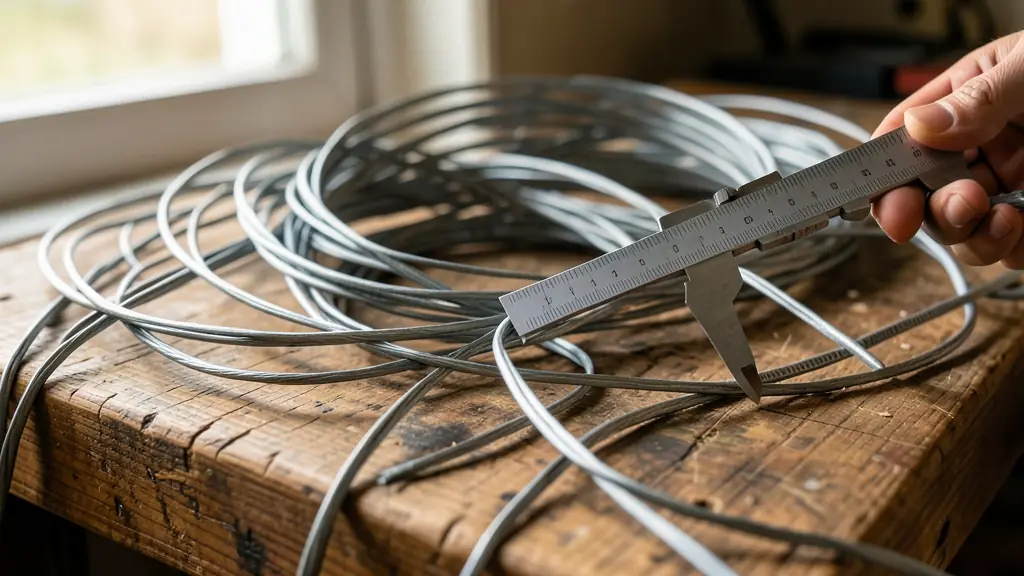
How the fence calculator works
Every wire mesh fence is built the same way. Strong straining posts go in at the corners, at the ends of a run and on both sides of every gate. Each one is braced with one or two stays so it can take the pull of the wire. Lighter line poles go in between, usually every 3 m for diamond mesh. Rows of straining wire are tensioned between the straining posts, and the mesh is stretched and tied onto them.
The calculator splits your boundary into straight sections at every corner and gate opening, then adds an intermediate straining post wherever a straight run is longer than about 50 m, because mesh cannot be tensioned properly over longer distances. It counts the line poles needed in each section at the spacing you choose, adds the stays and works out the length and mass of straining wire for the height of your fence.
For palisade, the count is simpler: one panel per 3 m bay, one post per panel plus an extra post at every gate opening or open end. Panels cannot bend round a corner, so each straight section is rounded up to whole panels.
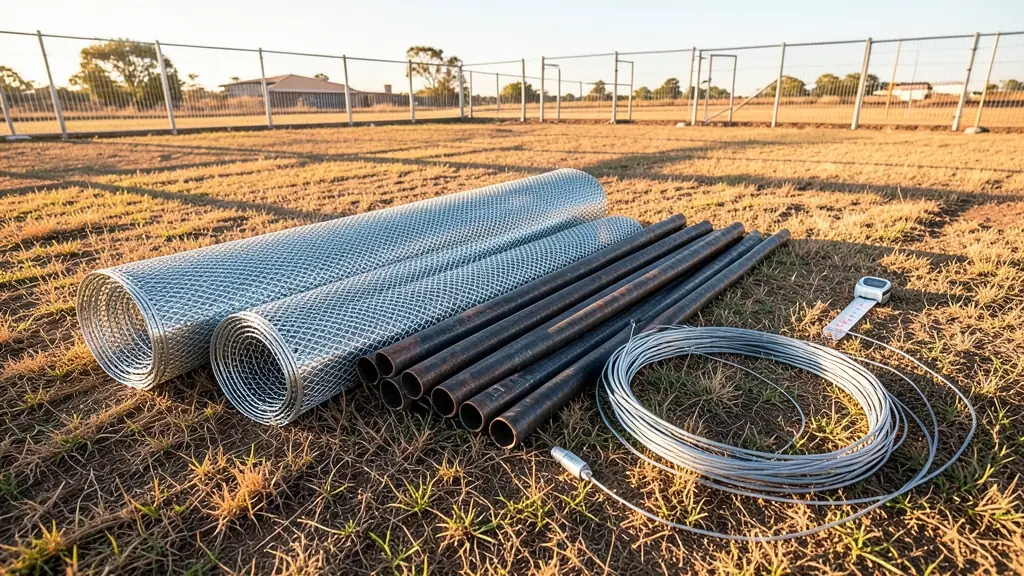
How to measure your boundary
- Walk the line with a measuring wheel or a long tape, and note the length of each side. Online maps give a useful first figure, but measure on site before ordering.
- Count every change of direction as a corner. A boundary that bends round a tree or a rocky outcrop has more corners than the title deed shows.
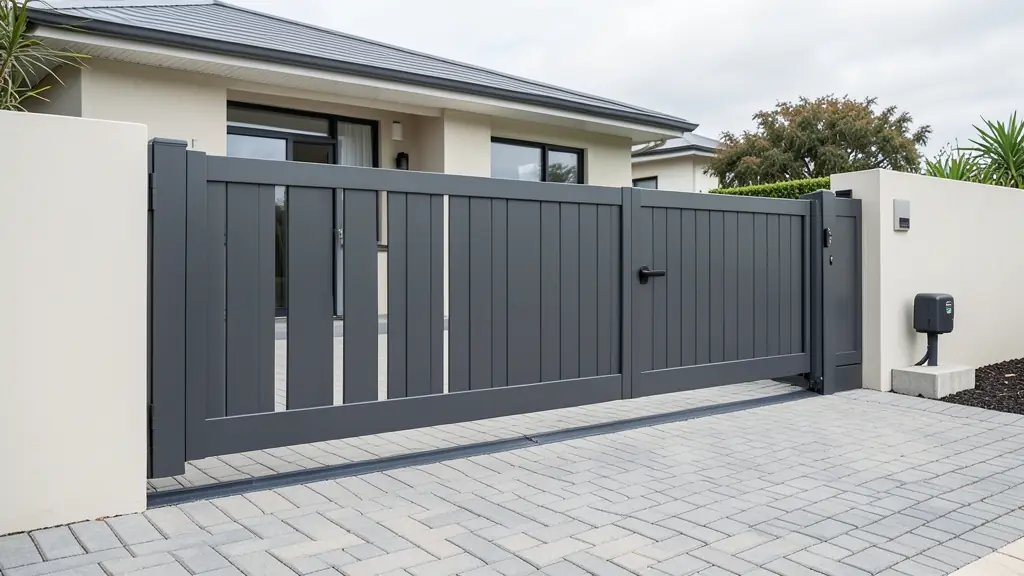
- Measure each gate opening. A pedestrian gate is usually about 1 m, a driveway gate 3 m to 4 m and a farm or truck gate 4 m to 6 m.
- On slopes, measure along the ground, not the horizontal distance on a plan. Steep ground also needs more posts.
What affects fencing cost per metre
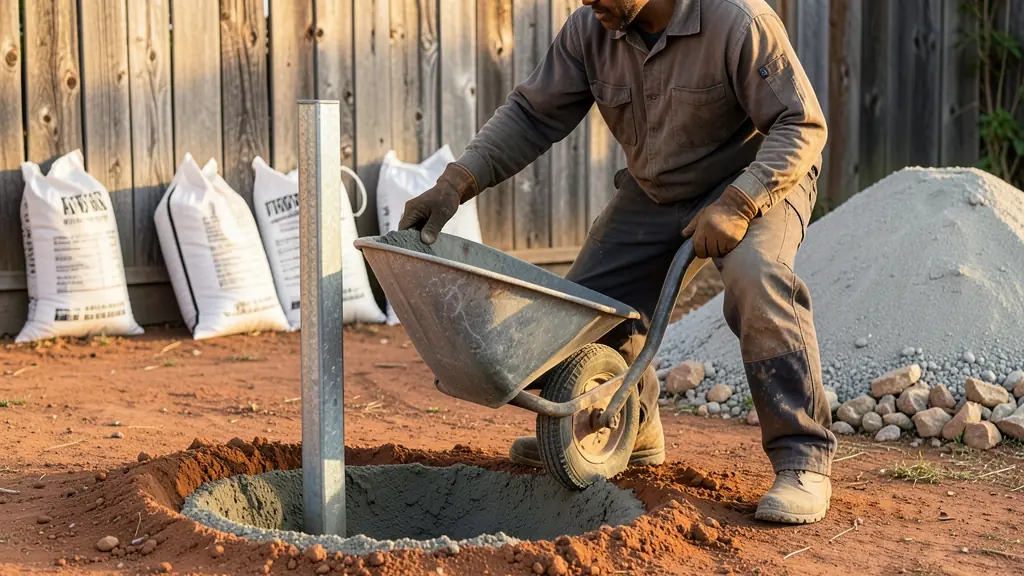
The material is only part of the price. Labour, poles and concrete often add as much again, and these change the final figure:
- Height and wire thickness: a 2.4 m heavy-duty fence uses taller poles and more wire rows than a 1.2 m garden fence.
- Corners and gates: every corner and gate needs braced straining posts, which cost several times more than a line pole. Short, broken boundaries cost more per metre than long straight ones.
- Ground: rock, clay and slopes slow down digging. Coastal sites may need PVC-coated mesh.
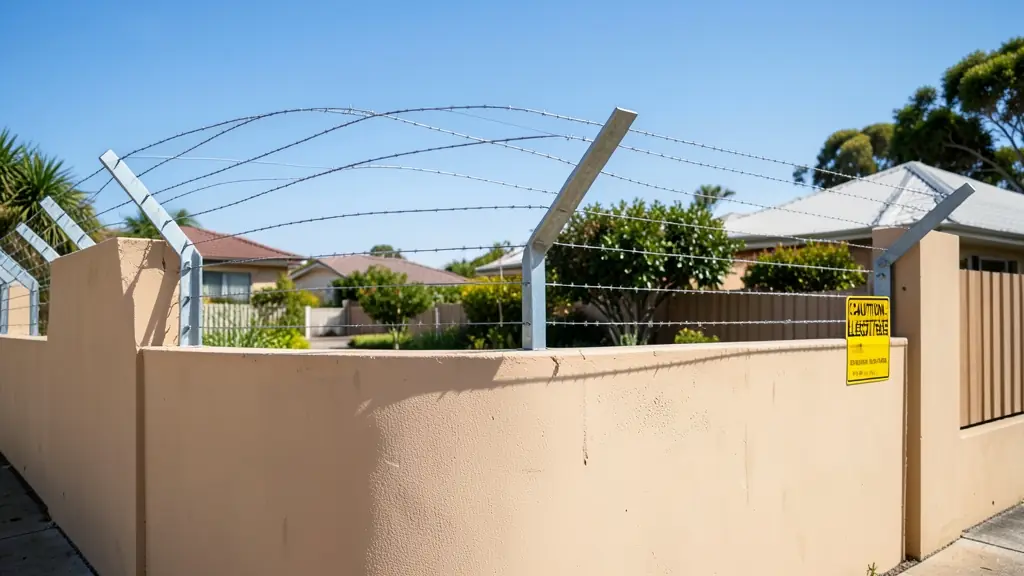
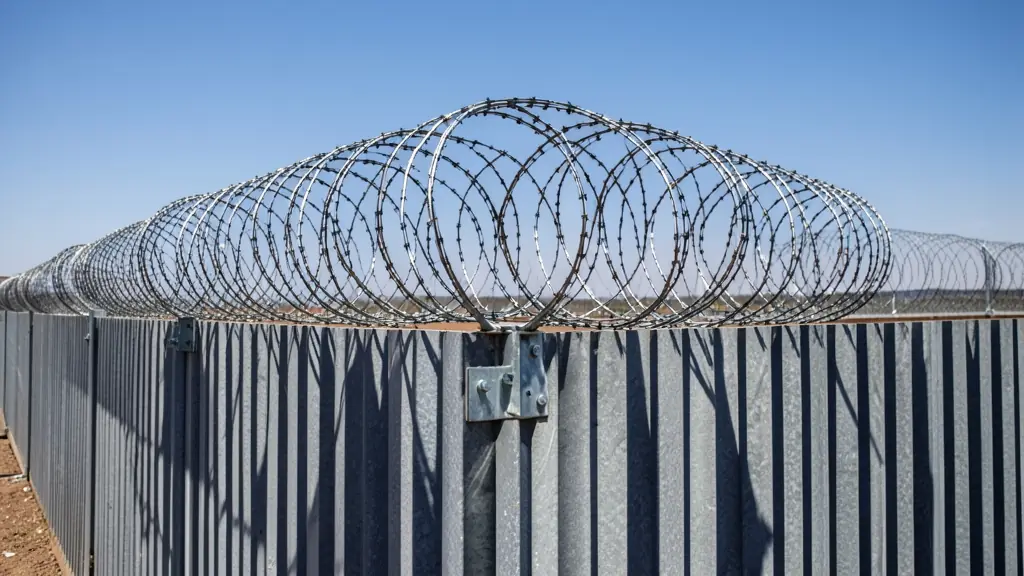
- Extras: razor wire, barbed wire or an electric fence on top, removing an old fence and clearing bush along the line.
Enter the prices from a supplier's list into the calculator to compare options, then ask for a written quote that includes labour and delivery.
Get a quote for your project
The figures above are an estimate for planning. For an exact price, press Add these figures to my quote and send the form. A fencing contractor in your area will measure up and send you a free quote, with no obligation.
Frequently asked questions
How many poles do I need for 100 m of diamond mesh fence?
With poles every 3 m on one straight 100 m run, you need about 32 line poles plus two end straining posts and two intermediate straining posts (one every 50 m or so), each with its stays. Corners and gates add more straining posts. Use the calculator with your own corners and gates for an exact count.
How many rolls of diamond mesh do I need?
Diamond mesh is usually sold in 30 m rolls. Divide the fence length (without the gate openings) by 30 and round up. The calculator adds about 3% for joins and offcuts.
What spacing should fence poles have?
Line poles for diamond mesh are usually 2.5 m to 3 m apart. Weldmesh and taller or heavier fences need closer spacing, often 2.5 m. Palisade posts sit at the panel width, usually 3 m. Straining posts go at every corner, end and gate, and at least every 50 m on long straight runs.
Is the calculator a quote?
No. It gives a material estimate for planning. Ground conditions, the exact products and labour rates vary, so request a free quote and a contractor will price your actual boundary.