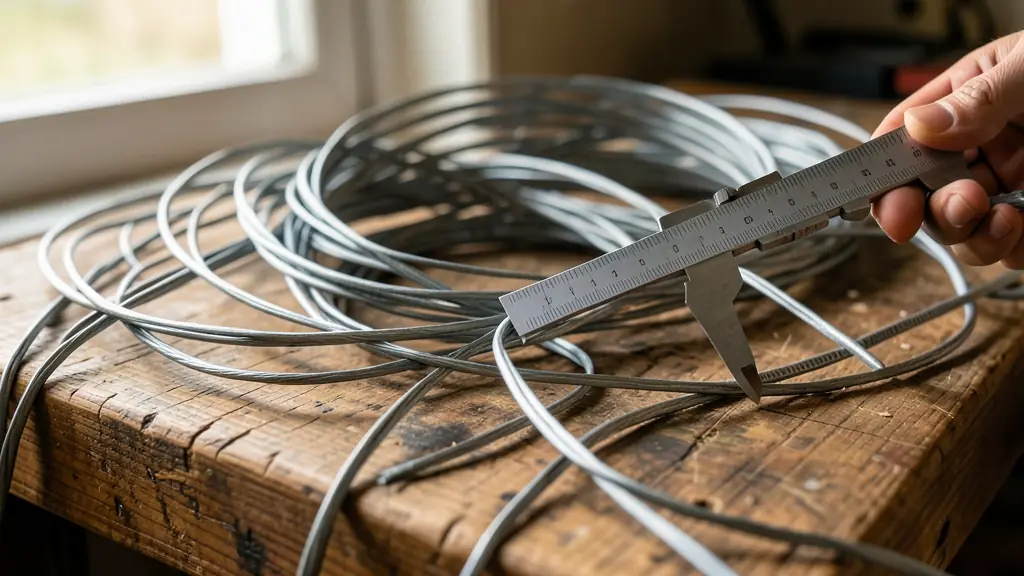
What an electric fence is made of
A security electric fence has three parts: the energiser, which sends short high-voltage pulses down the wire and raises an alarm when the fence is cut, shorted or earthed; the fence itself, made of brackets or posts, insulators and tensioned wire strands; and the earth system, a set of earth spikes driven into the ground near the energiser.
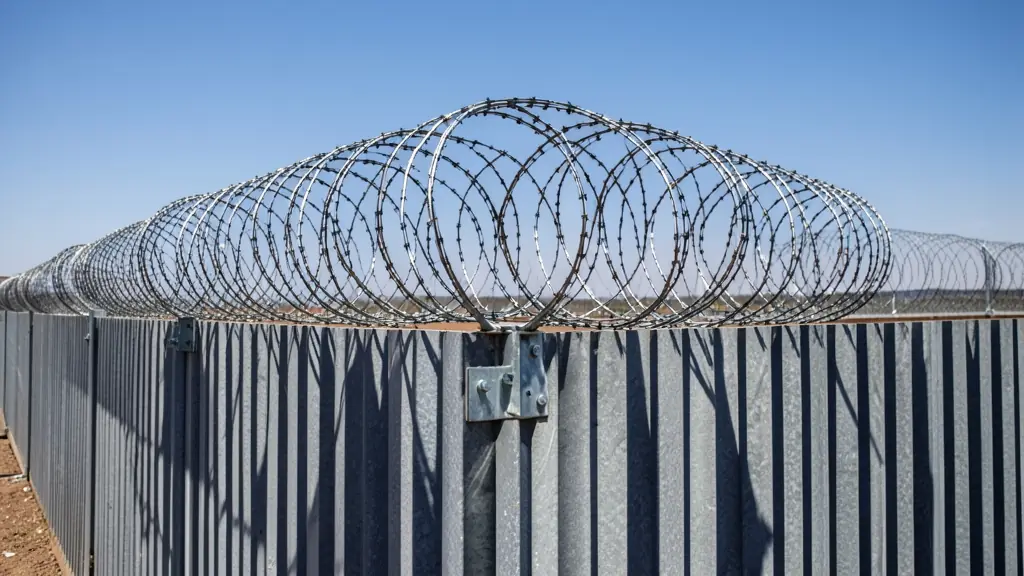
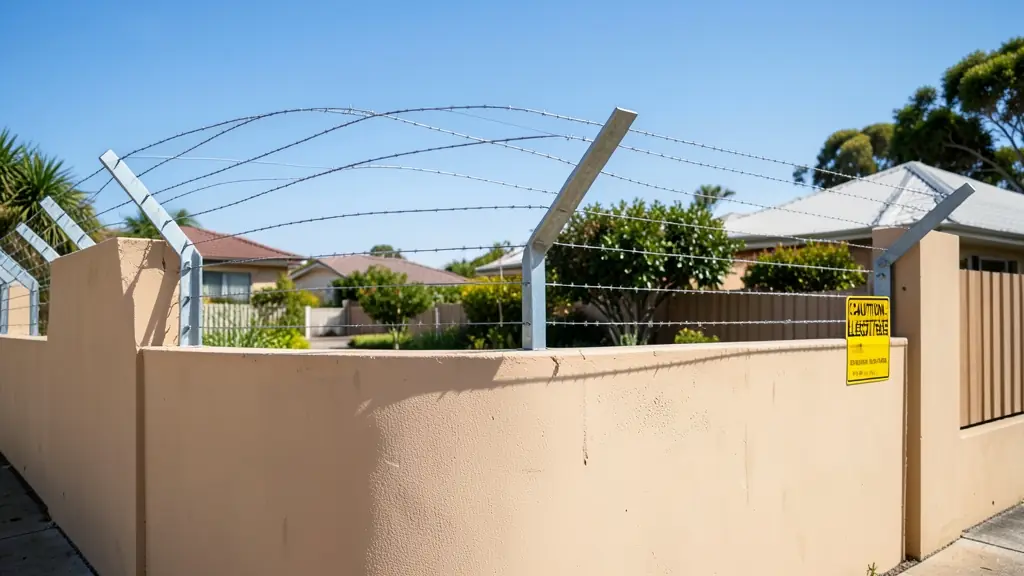
On a wall, angled or straight steel brackets are bolted into the top course every 2.5 m to 3 m. Free-standing fences use their own posts. At every corner, end and gate the wire is anchored to a strainer bracket with strain insulators and a tensioner, so the strands stay tight and do not touch each other or the wall.
Rules for electric fences in South Africa
- Electric fences must meet the safety standard SANS 10222-3, which covers things like the energiser, the height of the lowest strand and the distance from public walkways.
- Yellow warning signs must be fixed at regular intervals, no more than 10 m apart, and at every gate and access point. The calculator counts one sign per 10 m.
- Since 2012, a new electric fence or one that is altered needs an Electric Fence System Certificate (EFC) from a registered electric fence installer. Insurers and buyers of your property may ask for it.
- Many municipalities and estates have their own rules about where and how high an electric fence may go, so check before installing.
Planning tips
- Keep plants and branches clear of the strands. Vegetation drains the pulse and causes false alarms.
- Split long perimeters into zones so the alarm panel shows where a fault is.
- Plan where the gate crossings go before building, because cable is run underground in a sleeve across each gate opening.
- Fit a battery backup so the fence keeps working during load shedding.
Get a quote for your project
The figures above are an estimate for planning. For an exact price, press Add these figures to my quote and send the form. A fencing contractor in your area will measure up and send you a free quote, with no obligation.
Frequently asked questions
How many strands should a wall-top electric fence have?
Most wall-top security fences in South Africa have 4 to 8 strands, depending on the height of the bracket. Free-standing fences that are the main barrier usually have 10 or more strands. More strands make it harder to climb through.
Do I need a certificate for my electric fence?
Yes. Any electric fence installed or altered since 1 October 2012 needs an Electric Fence System Certificate (EFC) issued by a registered electric fence installer. The certificate also transfers when you sell the property.
How far apart should electric fence warning signs be?
Warning signs must be no more than 10 m apart along the fence, and at gates and access points. The calculator counts the signs for your perimeter.