
Understanding Palisade Fencing and Its Security Benefits
What Is Palisade Fencing? A Brief Overview
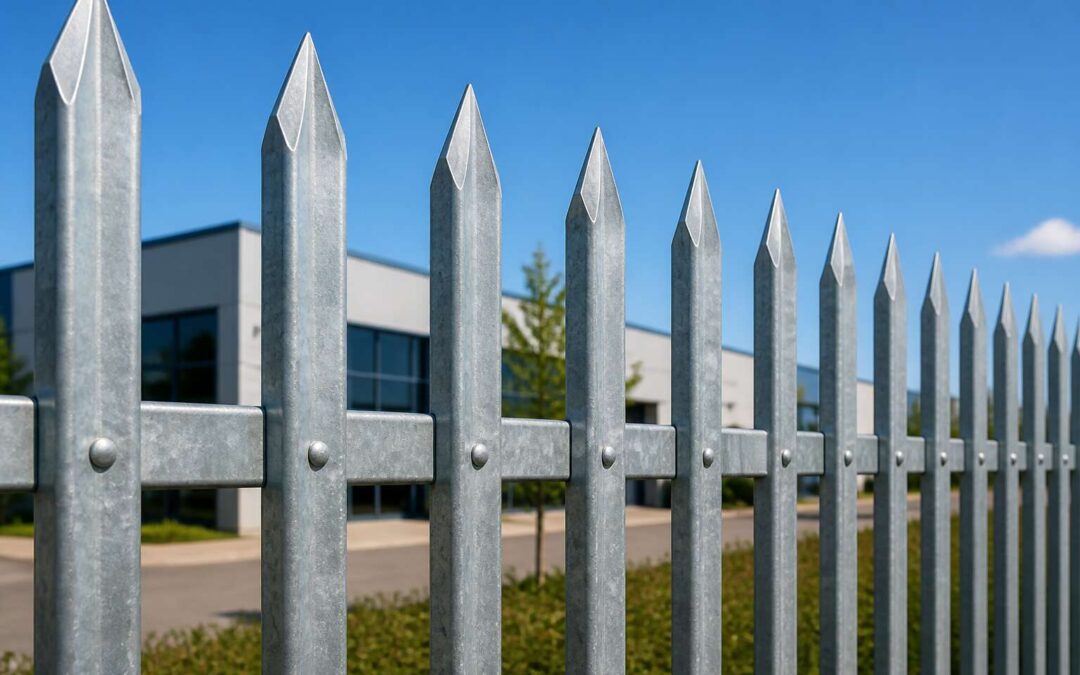
Palisade fencing’s security value comes from a paradox: the barrier is physically open yet psychologically closing. While solid walls create blind spots, the vertical steel pales preserve sightlines for constant monitoring. Intruders cannot assume concealment, and that uncertainty is a deterrent in itself.
Those inspecting palisade fencing for sale should examine how the pales connect to the rails. Welded joints resist distortion, and in my experience, this is where cheaper systems fail first. Anti-lift brackets stop the panel from being raised off its foundations. Spear-headed pales add physical consequence without excessive weight.
- Open geometry does not obstruct cameras or patrol sightlines.
- The vertical profile makes climbing awkward and noisy.
- Galvanised or powder-coated finishes endure coastal and highveld conditions.
Across South Africa, palisade fencing for sale is measured by tensile strength and corrosion resistance rather than aesthetics. Thicker steel in the vertical members delays cutting attempts, and a quality finish prevents rust staining.
Key Design Features That Deter Intruders
The gap between pales is the first thing a determined intruder tests. When reviewing palisade fencing for sale, check the spacing between vertical members. Standard spacing of around 100mm stops most hands, but tighter spacing at 76mm prevents finger holds. This detail separates secure systems from weaker alternatives.
Fixing hardware also matters. Anti-tamper bolts and concealed brackets deny intruders the easy route of unbolting a panel. Cutting through a pale takes time and makes noise. Removing a panel with a wrench does neither. In my experience, the best designs make the connection points unreachable.
Height and pale profile matter as much. A 2.4 metre fence with cranked pales resists leverage far better than a flat profile. The bends stiffen each pale, so climbing produces noise and vibration that draw attention. These features determine whether the palisade fencing for sale deters or merely decorates.
Common Applications for Commercial and Industrial Properties
Security barriers work best when they remove doubt. Palisade fencing creates a defined perimeter that makes trespassing visibly risky. The narrow profile and open structure allow monitoring while denying easy entry. For owners, the protection comes with low upkeep and a lifespan measured in decades.
Commercial and industrial sites place these systems where failure is unacceptable. Common locations include:
- Substations and transformer yards
- Container terminals and loading docks
- Mining claims and fuel storage areas
When I assess palisade fencing for sale, I look past the price and check the steel thickness and gusset placement. Every component matters under real conditions!
Comparing Palisade Fencing to Other Security Fencing Options
Security comes down to how quickly a barrier can be bypassed. Palisade fencing for sale offers a vertical design that forces attackers to work within sight. Sharp pales and welded rails resist cutting and climbing. Unlike solid walls, this fencing allows guards to see through, so threats are visible before they escalate. Many owners underestimate that visibility. It turns the fence into a surveillance tool and a barrier.
Other security options often trade one weakness for another. Consider the common alternatives:
- Chain link climbing is easy and provides negligible deterrence.
- Concrete walls block sight lines and feel imposing, but they take up space and cost more.
- Welded mesh panels can be cut with basic tools if the wire gauge is too thin.
Palisade fencing for sale combines the openness of mesh with the strength of steel. For high risk sites, the balance is hard to beat!
Material Choices and Their Impact on Durability
Along South Africa’s coast, salt spray attacks steel. Palisade fencing for sale with a zinc coating below 450 grams per square metre can lose half its structural strength within ten years. This directly affects security: rust weakens weld joints, and weak joints become entry points.
The choice of material determines that outcome. Hot-dip galvanised steel is the benchmark for marine environments. Chromadek offers visual appeal but demands vigilance where scratches expose bare metal. Consider the trade-offs:
- Hot-dip galvanised pales resist corrosion longest in humid coastal regions.
- Chromadek coated profiles need edge inspection after installation.
- Pre-galvanised steel works inland but traps moisture if not properly drained.
Inadequate coating fails early, exposing the structure to corrosion. Site conditions, not price, dictate the specification.
Essential Factors to Evaluate When Buying Palisade Fencing
Assessing Your Security Needs and Perimeter Risks
Every perimeter has quiet vulnerabilities, and in South Africa, too many are revealed only after a breach. Property crime remains high, and most security failures trace back to a fence selected without a thorough vulnerability audit. Before searching for palisade fencing for sale, map every gap, shadow and access point on your grounds.
Assessing your security needs means studying sightlines, adjacent structures and daily movement patterns. A blind corner, an overgrown verge or an unlit service gate shifts the entire risk profile. This evaluation dictates the specifications you require, from bar thickness to blade geometry.
- Assess fence line visibility after dark.
- Flag entry points needing crash-rated reinforcement.
- Measure how slope alters effective panel height.
The palisade fencing for sale offers varying resistance, yet its value depends on the assessment behind it. A nighttime walk of the perimeter reveals where a determined intruder would test you. That knowledge determines whether your investment becomes a genuine barrier or an expensive mistake.
Choosing the Right Height and Gauge for Maximum Protection
Height and gauge are the two decisions that determine whether your palisade fencing for sale actually performs when tested. A fence that stands 2.4 metres may look imposing, but if the steel gauge is too light, a crowbar can bend it. Conversely, a heavy gauge with insufficient height invites a simple climb.
For most South African perimeters, a minimum of 2.4 metres is sensible, though slopes can reduce effective height. Gauge matters more than most buyers realise. Thicker steel resists cutting and prying, but it also adds cost. Matching both to your specific risk profile is the real work.
- Check the actual steel thickness, not just the product name.
- Verify that height is measured from ground level, not from the base rail.
- Consider anti-climb extensions if your perimeter faces open ground.
Your palisade fencing for sale should feel like a commitment, not a gesture.
Understanding Coating Types and Corrosion Resistance
Salt-laden coastal air in Durban or Cape Town accelerates corrosion on steel. Galvanisation quality decides whether your palisade fencing for sale survives a decade or three. Hot-dip galvanising creates a thicker zinc layer than electro-galvanising, and that difference shows on cut edges.
I have seen palisade fences fail in three years because the coating weight was skimped. The zinc coating weight is measured in grams per square metre. Powder coating adds colour and a moisture barrier, but it chips. The zinc layer underneath does the real work.
- Zinc coating weight of at least 275 g/m² for coastal exposure
- Powder coating applied over galvanised steel, never as a substitute
- Drilled holes and mitred ends protected against bare metal exposure
Corrosion begins where the protective layer thins. Palisade fencing for sale with untreated drilled holes rusts from the inside out, long before the visible panels fail.
Budgeting for Both Materials and Installation Costs
Budgeting for palisade fencing for sale demands attention to hidden costs. The per-metre price covers only the steel. Site preparation, concrete footings, and labour often add 30% to 50% to the total.
I have seen property owners overlook access constraints! A narrow driveway or steep slope forces manual handling, which raises installation hours. Ask your supplier for a full breakdown before signing.
- Transport and delivery fees
- Ground levelling and excavation
- Gates and additional security hardware
- Labour for drilling and fixing
Compare quotes with identical specifications. Cheaper alternatives may use thinner steel or lighter coating. That saving disappears within a decade when corrosion forces replacement.
Where to Source High-Quality Palisade Fencing for Your Project
Local Fencing Suppliers vs. National Distributors
Every week, buyers across South Africa search for palisade fencing for sale and face a choice: the friendly fabricator down the road or the national giant. Local fencing suppliers often win on service. They can walk your perimeter, recommend specific profiles, and respond quickly when installers have questions. National distributors counter with scale. Their buying power translates to sharper prices and consistent stock levels.
Some buyers choose based on delivery timelines alone. Others factor in after-sales support, warranty administration, and the ease of securing replacement panels later. The right answer depends on your project size and schedule.
When comparing options, ask about:
- Lead times from order to delivery
- Stock availability across standard heights
- Whether delivery is included or charged separately
A national distributor might offer the best palisade fencing for sale price, while a local supplier brings site-specific advice. Neither option is inherently better. The match depends on your priorities.
Evaluating Online Marketplaces and Direct Manufacturer Deals
Online marketplaces present palisade fencing for sale at varied price points, yet the lowest number often hides delivery complications. Direct manufacturer deals expose the production details. You see the steel gauge, the zinc coating, and the welding points without intermediaries.
When I compare sources, I check three things!
- SANS certification documentation
- Price per linear meter complete with brackets
- Transparency on transport to site
A manufacturer’s direct quote reflects its own stock and machinery. A marketplace aggregates many sellers, which complicates warranty claims. For a perimeter that requires consistent profiles, bypass the online listings and speak to the mill. Your fence’s structural integrity depends on that conversation.
Reading Customization Options from Leading Brands
When I search for palisade fencing for sale, I look past the base quote and study the customization sheet. Leading brands offer variations in spear configuration, rail spacing, and bracket style. These choices affect both aesthetics and security performance.
Reading a brand’s specification table tells you more than any sales pitch! A proper manufacturer lists steel thickness, coating weight, and profile dimensions openly. I verify these numbers against SANS standards before I commit. Some brands even let you adjust the gap between vertical blades to meet specific security grading requirements.
- Spear type and spacing
- Rail orientation and count
- Bracket and clamp options
The right customization turns a standard perimeter into something matched to your site’s particular risks, without paying for features you do not need. That precision matters when the fence line stretches for hundreds of meters.
How to Verify Product Authenticity and Warranty Coverage
When you search for palisade fencing for sale, the supplier’s credibility matters as much as the price. In South Africa, established manufacturers operate direct from the factory, which offers better traceability than anonymous resellers. A legitimate operation will invite you to inspect the production line, where you can see the galvanizing process and steel gauge firsthand.
Verifying authenticity requires more than a glance at a brochure. Ask for a SANS certificate and a sample of the actual profile. Then examine the warranty coverage carefully. Most quality brands back their product for ten years, but the conditions vary. Some warranties require professional installation and documented maintenance.
- Request the batch number from the galvanizing plant
- Confirm the warranty claim process with a written response
Without these checks, a warranty may prove unenforceable and the perimeter fails to meet its security rating.
Requesting Quotes and Comparing Price Estimates Effectively
The cheapest quote on your screen may hide a delivery fee or a vague ‘and sundries’ line. When you search for palisade fencing for sale, you want a supplier who answers questions before you ask them.
Requesting quotes effectively requires precise information. Standardise your specification first:the perimeter length, the number of gates, and the required steel gauge. Then ask for a breakdown covering material, labour, delivery, installation, and waste removal. A vague enquiry gives you a vague price.
Comparing estimates demands forensic attention. Two similar totals can hide different provisions. Always check if the price includes earthworks, concrete, or compliance with local regulations.
Price estimates are starting points, not absolute truth. The final cost emerges when you factor in gate automation, post spacing, or municipal regulations. Quality palisade fencing for sale deserves a quote that reflects your perimeter’s complexity, not a lazy template.
Transportation and Delivery Considerations for Bulk Orders
You might expect a bulk order of palisade fencing for sale to arrive pristine, yet careless offloading can dent a panel in seconds. Transport costs hinge on axle loads and site access. A factory in Gauteng delivering to Cape Town will quote differently than a local mill, so compare per-tonne freight, not just the product price.
Delivery schedules must align with contractor readiness. Confirm whether the haulier can reverse into the gate, or if municipal traffic rules restrict arrival windows. Stacking method matters during transit.
- Tarpaulin covers for long routes
- Inspection of every bundle before signing
- A dry, ventilated staging area
Offloading equipment is your expense or the supplier’s. Some quotes include a crane truck; others assume a forklift on site. That distinction can shift your total budget by thousands.
Professional Installation vs. DIY Palisade Fencing
Step-by-Step Guide for Self-Installation Enthusiasts
There is an undeniable satisfaction in raising your own palisade fence, a quiet pride that no contractor can replicate! In South Africa, the choice between hiring experts and embracing the labour yourself often comes down to your confidence with a level and a post hole digger.
For the do it yourself enthusiast, the sequence rarely changes:
- Mark the entire perimeter with strings and pegs.
- Dig holes to the correct depth, accounting for soil stability.
- Set steel posts in concrete and allow a full cure.
- Hang the rails, then fix the palisade sheets securely.
This method saves money, but it consumes days. Professional teams complete the same scope in hours, using laser levelling and hydraulic drivers. When reviewing palisade fencing for sale, installation quality dictates longevity more than the steel itself.
Required Tools and Materials for a Secure Fit
There is a moment, just after a contractor’s bakkie pulls away, when the quality of a gate installation becomes obvious. The alignment, the swing, the silence when it closes. Professional teams in South Africa bring telehandlers, laser levels, and torque wrenches to the site. Their work is not measured in hours but in millimetres.
For DIY installs, the essential list is short:
– A post hole digger or auger
– A spirit level and string line
– A concrete mixer or a wheelbarrow and spade
– A hammer drill with masonry bits
– A torque wrench for the fasteners
Renting these tools adds to the cost. A professional quote for palisade fencing for sale often includes everything, from the crane time to the last bolt. The materials themselves matter, but the final fit depends on whether the rails hang true and the sheets line up. I have seen DIY efforts fail not on steel quality but on a single misaligned post. The security of palisade fencing for sale is only as strong as the installation.
Common Installation Mistakes to Avoid
Most installation failures surface months after the crew leaves. A gate drags on the gravel. Panels ripple along the boundary. Rust blooms where the coating scratched during assembly. These are not steel defects. They are fitment errors that undermine the strongest palisade fencing for sale.
Post depth is the most frequent issue. Shallow holes in soft Highveld soil shift under load, pulling the line out of true. String lines and laser levels exist for this reason. I have watched crews skip them entirely.
Over-torquing fasteners is another common error. The zinc cracks around the bolt head, and corrosion begins before the first winter.
- Posts set without checking vertical alignment on both axes
- Concrete mixed too wet, weakening the hold
- Rail ends butted tightly, leaving no room for thermal movement
- Bolts driven past the torque specification
Every failure traces back to the installer, not the product. That is why specifiers must evaluate workmanship as carefully as the price of palisade fencing for sale.
Why Professional Installation Ensures Long-Term Performance
Assembling your own perimeter has genuine appeal. The reality involves augers, concrete mixers, and a spirit level that refuses to cooperate. A DIY palisade installation saves money upfront, yet it often compromises the structure’s future performance.
Professional crews charge for what they know, not merely for the hours they spend. They understand ground conditions, torque specifications, and thermal expansion. A misaligned panel can look impeccable in March and betray itself by September.
Consider what a professional brings:
- Soil analysis before the first hole is dug
- Precision alignment tools that measure rather than guess
- Familiarity with local weather patterns and ground movement
When comparing palisade fencing for sale, the gap between material costs and installation quotes reveals a great deal. The cheapest palisade fencing for sale fails quickly if the installation is flawed. Prioritise workmanship, and the fence will stand reliably for decades.
Maintenance, Lifespan, and Overall Cost Efficiency
Routine Inspection and Cleaning Best Practices
Most fence failures start with a single rust spot the owner ignored. A palisade fence is a long term asset, but it demands regular attention. Inspect the steel often, focusing on weld points and base plates where moisture collects first. Surface rust caught early costs a simple touch-up. Rust ignored leads to section replacement.
Cleaning matters more than most owners realise! A pressure washer removes dirt that traps moisture against the coating. Check the concrete footings, gate hinges, and locking mechanism. Use a simple checklist:
1. Inspect weld points and base plates for rust.
2. Clean the fence line twice a year.
3. Test every gate and lock for smooth operation.
A maintained palisade fence lasts decades. The galvanised coating is the only barrier between the steel and corrosion. Compare upkeep costs to full replacement, and the choice is obvious. When you see palisade fencing for sale, factor in warranty terms, because most warranties demand proof of regular care.
Repairing Damaged Sections and Replacing Components
One damaged pale can compromise an entire perimeter. Palisade fencing for sale often looks uniform, but steel ages unevenly under the Highveld sun or coastal salt. When a section bends from impact or corrosion eats through the weld, repair it immediately! Replace the damaged part before it undermines the pales beside it.
Replacing components is straightforward when you match the original gauge and coating. Common parts include:
- Individual pales with the same profile
- Gate hinges and locking mechanisms
- Base plates corroded by standing water
I have watched rust spread beneath a galvanised layer when repairs are delayed, so early action matters. A small repair costs a fraction of a full replacement and protects the lifespan of the whole fence. Palisade fencing for sale options vary in component availability, and that difference determines cost efficiency over twenty years of service.
Estimating the Long-Term Value and Return on Investment
Maintenance records tell the true story of any perimeter. In my years inspecting industrial sites, I have watched neglected fences fail early. A fence that receives regular attention will outlast a neglected one by decades. The Highveld sun bleaches, coastal air corrodes, and small faults expand when ignored.
The initial price of palisade fencing for sale fades against the full lifespan. A well maintained steel palisade serves twenty five years or more. A neglected one fails within ten. The metal is the same. The difference lies in the attention paid to it.
The true cost of palisade fencing for sale emerges over time. Cheap options demand early replacement. Properly coated, properly installed, properly inspected systems return their value year after year.
The arithmetic of ownership includes:
1. Annual inspection costs
2. Repair frequency
3. Replacement timeline
Track these numbers across twenty years and the value of a durable fence becomes undeniable.
Eco-Friendly Disposal and Recycling at End of Life
The steel in palisade fencing for sale carries a second life beyond its security role. When a perimeter finally reaches the end of its service, that material returns to the manufacturing cycle. Galvanised steel loses none of its value in the recycling stream.
Maintenance habits determine when that moment arrives. A simple annual wash removes corrosive buildup. Coastal properties demand more frequent attention. Those small efforts stretch the lifespan well past two decades.
The cost efficiency of palisade fencing for sale becomes clear when comparing total ownership. The scrap value of old panels offsets part of the replacement price. Recycling eliminates landfill fees. Contractors regularly pull decades old sections from a site and still receive a fair price for the metal.
- Old palisade sections are 100% recoverable
- Scrap dealers pay per ton for galvanised steel
- Recycling avoids environmental penalties
That final transaction turns an ageing fence into a credit.