
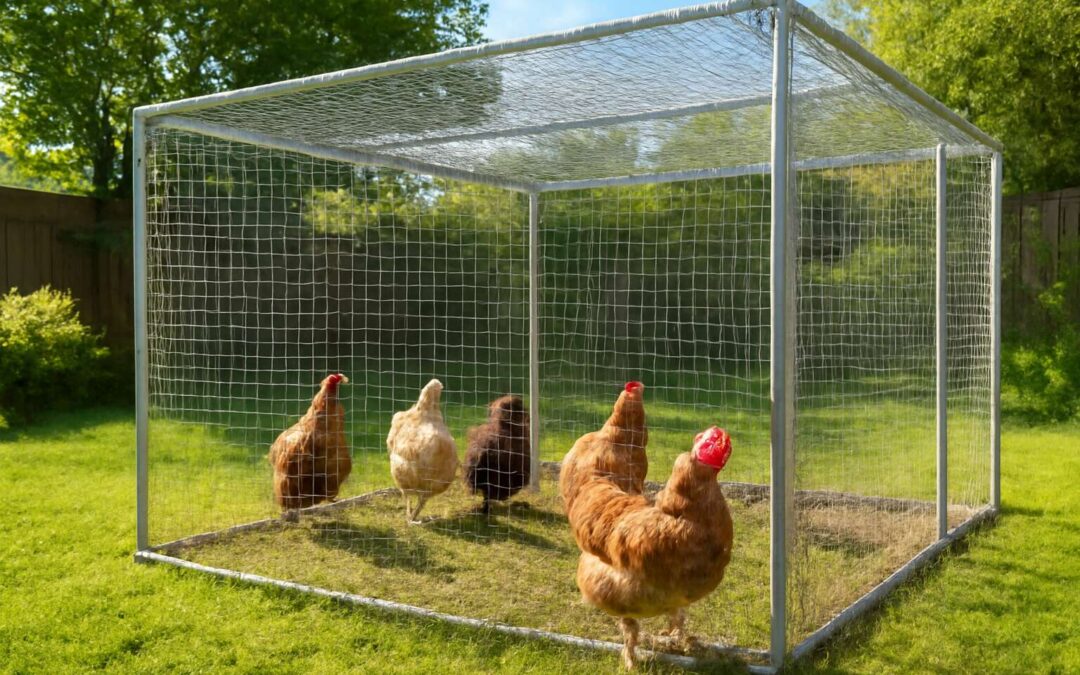
Fence Types for Chickens
Chain Link and Welded Wire Pros and Cons
Fences do more than mark borders; they shape a flock’s daily rhythm. In South Africa, where predators and theft lurk in the hedges, many ask what fencing is best for chickens. Chain link and welded wire stand out as the two traditional choices, each offering a different balance of safety and practicality.
Here’s a concise snapshot of their pros and cons:
- Chain Link — Pros: durable, widely available, affordable for larger runs.
- Chain Link — Cons: can rust if not galvanized and may require ground skirts to deter digging.
- Welded Wire — Pros: tighter openings, less prone to digging and escape; sturdy panels.
- Welded Wire — Cons: higher upfront cost and less flexibility for curved layouts.
Ultimately, South African suppliers stock both options, and the choice often hinges on site conditions and maintenance expectations. The right pick harmonizes safety, cost, and longevity, keeping the discussion anchored in the broader question.
Hardware Cloth vs Poultry Netting: Where to Use Each
Fences are lifelines for backyard flocks in South Africa, where theft and predators stalk gardens. What fencing is best for chickens isn’t a one-size-fits-all question. Hardware cloth and poultry netting each offer distinct security and cost profiles, shaping daily routines and peace of mind. That’s practical!
Hardware cloth, with its tight 1/4-inch mesh, deters digging and small predators and doubles as a coop floor or skirting. It’s galvanized or powder-coated, lasting longer in our climate and resisting rust in exposed areas.
Poultry netting is inexpensive and quick to deploy over large areas, but its larger holes leave openings for diggers and more adventurous predators. It’s light, easy to stretch over frames, and works well for covered runs where conditions are less risky.
- Hardware cloth provides tighter protection for critical zones like coop floors and run perimeters.
- Poultry netting offers a cost-effective option for expansive setups, with higher predator risk to consider.
Electric Fencing for Predators and Containment
Predators stalk the perimeter, and in South Africa many backyard flocks see losses fall dramatically when electric fencing is installed—some keepers report up to a 40% drop. Such deterrence translates to calmer mornings and livelier hens.
So, what fencing is best for chickens? For many, electric fencing offers a pragmatic blend of containment and deterrence. A well-energized strand can cover large runs quickly, adapts to terrain, and works with covered areas where risk remains high.
- Voltage safety and animal-friendly settings
- Durability in sun, rain, and heat
- Height and spacing to deter diggers and climbers
- Compatibility with existing boundary features
In the end, balance is key. Electric fencing can be the core of a secure, free-ranging system that protects a flock while preserving daily rhythms.
Fence Height Depth and Access Points
Across South Africa, a fence that respects birds’ instincts calms mornings and reduces losses. This section on what fencing is best for chickens looks at the three pillars that shape safe, humane perimeter design: Fence Height, Depth, and Access Points.
Consider these high-level design criteria:
- Height: tall enough to deter diggers and climbers, while allowing comfortable foraging and movement for the flock.
- Depth: a secure base that discourages digging and ground-level breaches without creating hazards for the birds or the terrain.
- Access Points: strategically placed gates and robust latches that balance daily checks with security and bird welfare.
Key Factors for Selecting Chicken Fences
Chickens size breed and flock behavior
Across the South African veld, chickens teach humility at dawn. Nearly a fifth of free-range flocks test a fence within days of being let into a yard, reminding us that what fencing is best for chickens hinges on more than wire. The right enclosure honours the birds’ nature.
Key factors start with size, breed, and flock behaviour. Bantams squeeze through gaps; heavy breeds demand sturdier railings; flighty layers test height and spacing with a twitch of the wing.
- Size and breed differences
- Flock behaviour and foraging patterns
- Predator pressure and safety features
By listening to the pasture and the coop’s rhythms, farmers craft fences that feel almost invisible to a wary sunrise—solid, respectful, and quietly joyful.
Predator pressure and local climate
When considering what fencing is best for chickens, predator pressure and local climate top the list. Across the South African veld, dawn reveals a quiet calculus: intruders test the perimeter, while heat and rain test its seams. The enclosure should stand as a respectful partner to the birds, neither cage nor prison, but a living boundary that breathes with the land.
- Predator pressure: tailor mesh, access points, and reinforcement to deter region-specific intruders
- Local climate: heat, rain, wind, and sun exposure shaping material choices and maintenance needs
- Ground conditions: soil type and drainage influence how the fence sits and handles seasonal shifts
Let the land’s temperament guide the choice of materials, height, and security features. Solar glare, heavy rains, and scrubby winds demand corrosion-resistant mesh, wide but sturdy gaps, and gentle shade for the flock. I hear the dawn answer in the rust and the rustle—fences that belong to the morning, not against it.
Durability materials and maintenance
Fences should breathe with the land; dawn reveals whether a boundary sings or sighs. For what fencing is best for chickens, durability and maintenance decide the lasting score. In the South African veld, the right choice balances strength with wind and sun, turning a mere barrier into a living corridor for the flock.
Durability rests on materials that weather salt, sun, and rain: hot-dip galvanised steel, heavy-gauge welded mesh, or polymer-coated options that shed rust like morning dew. Maintenance becomes a quiet ritual of inspection—tightened corners, reinforced access points, periodic coatings that keep seams supple through heat, rain, and season shifts.
Ground conditions and routine upkeep shape the long game. Consider these durability touchstones to guide selection:
- Corrosion resistance across seasonal moisture
- Sturdy gate reinforcement and hardware compatibility
- Accessible cleaning and easy inspection routes
Budget installation time and DIY options
South Africa’s veld is no place for flimsy fences; wind tests, sun scorches, and a chorus of clucking opinions demand something sturdier than a dream. Budget sets the frame, but installation time and a DIY spirit decide the final shape. If you’re asking what fencing is best for chickens, the answer hinges on a balanced purse, realistic schedules, and a pinch of ingenuity.
- Budget-friendly options: welded mesh or chicken netting with timber posts
- Mid-range choices: galvanised steel mesh with sturdy gates
- Premium setups: modular systems with polymer coatings and easy-maintenance features
For DIY enthusiasts, panel-and-post kits trim installation time, sometimes to a single weekend. Ready-made panels reduce labour and weather risks; better planning and a few tools make the rest straightforward.
Materials and Design Details
Material options chain link welded wire hardware cloth and netting
South Africa’s dawn tests every fence line, and the boundary between safety and sorrow is a practical poem. what fencing is best for chickens? A sturdy choice blends weathered grit with practical grace, turning predation into memory and letting flocks roost in daylight with calm confidence.
Materials and design details shape that boundary: chain link, welded wire, hardware cloth, and netting—each carrying a different mood for containment.
- Chain link: robust and economical for larger runs common on SA homesteads
- Welded wire: tight mesh that seals corners and low edges
- Hardware cloth: fine mesh at bases to deter small predators and digging
- Poultry netting: light, flexible for movable runs and chick spaces
These choices stitch protection with ease, ensuring the coop remains a sanctuary rather than a tomb.
Mesh size strength and corrosion resistance
South Africa’s sun and predators test every fence line. Mesh size, gauge, and coatings decide how long a barrier lasts. what fencing is best for chickens depends on predator pressure and climate. The goal is protection that doesn’t trap air or wings.
Key specs to compare:
- Mesh size: 1/4″ (6 mm) to 1/2″ (12 mm) to match threat level
- Strength/gauge: 14–16 gauge wire for durability without excess weight
- Corrosion resistance: galvanised, vinyl-coated, or stainless for SA humidity
Materials such as galvanised or coated steel resist humidity and coastal spray. Match coating to location, then reinforce corners and edges where digging or climbing can occur. I see this in the field: a well-chosen combination keeps the coop safe and the flock calm.
Electric fencing details energizers grounding and safety
Predators watch gaps; a fence that hums with purpose keeps them guessing. On South African farms, what fencing is best for chickens hinges on materials, energizers, grounding and safety—a chorus that protects flocks without trapping wings.
Materials matter: galvanised steel, vinyl coating, or stainless resist SA humidity. A properly sized energizer delivers enough joules to deter diggers, while corners are reinforced. Grounding forms a low-impedance path; moisture helps the network sing, and safety enclosures shield fingers and livestock alike.
- Energizer considerations: adequate joules and reliable surge protection; solar options suit remote farms.
- Grounding: multiple rods, properly spaced, with moist soil for dependable contact.
- Conductor and insulators: corrosion‑resistant wire and UV‑stable insulators at corners and gates.
- Safety: clear signage and enclosure shielding to prevent accidental contact during maintenance.
These elements weave a shield that endures sun and spray, inviting calm in the flock while predators drift past the boundary.
Gate design corners and perimeter planning
Across South Africa’s sunlit paddocks, the question of what fencing is best for chickens rests on material stamina and smart geometry. Galvanised steel, vinyl-coated wire, and stainless options shrug off humidity and spray, while a gate that closes with quiet certainty keeps flocks calm and predators guessing! In perimeter planning, straight runs, reinforced corners, and accessible boundaries create a frontier that hens respect and caretakers monitor with ease.
- Gate design: provide ample width for chores, a self‑closing hinge, and a weather‑proof latch.
- Corners: reinforce with extra posts and bracing to smooth any line and deter wobble.
- Perimeter planning: keep a consistent fence height, clear sightlines, and easy maintenance access.
These choices weave a resilient boundary around the coop, letting the flock roam with confidence and giving farmers peace of mind. This is how you discover fencing that endures on South African farms—materials that endure and designs that invite safe movement.
Installation Maintenance and Safety
Planning and measuring your run
A well-fitted fence is more than a boundary—it’s a promise to your flock. When considering what fencing is best for chickens, focus on an installation plan that balances security with airflow, easy access, and low maintenance for our South African yards.
Maintenance hinges on simple routines: check posts for wobble after wind, rinse grime from wires, and tighten fasteners before rain. For safety planning, map a buffer zone, trim encroaching vegetation, and keep access points well-lit for emergencies.
- Measure the full perimeter with a tape and include gate widths.
- Plan for corners by adding extra length to bends.
- Check ground movement and adjust posts accordingly.
- Note shade, wind exposure, and access for maintenance.
Measuring your run starts with a precise perimeter. Mark the space, add extra for gates and corners, and include a small safety margin for seasonal shifts.
Step by step installation tips
Installation begins with intention. For what fencing is best for chickens, the barrier must feel like a living corridor—air flows, predators stay wary, and your flock moves with ease, even in South African yards. Start by mapping the line, noting gate locations, and checking ground movement after rain. Regular maintenance becomes a ritual: wipe away grime from fasteners, re-tension wire when it sags, and greet wind with brace and balance.
- Mark the line and clear the route for posts
- Dig and set posts at the correct depth, aligning them evenly
- Tension and affix the mesh or wire, ensuring tight corners and no sag
- Hang gates with robust latches and weatherproofing
- Inspect weekly and tighten fittings before storms
Safety is the quiet partner of every proper installation—well-lit access points, clear buffers, and a calm routine keep daytime chores peaceful and evenings secure.
Maintenance schedules and common fixes
Maintenance isn’t glamorous, but it’s the quiet heartbeat of a chicken yard that stays safe and productive. If you’ve asked what fencing is best for chickens, you’ll learn the shield is as much about upkeep as material. I’ve learned this on muddy SA mornings: a well-kept fence breathes; a neglected one falters.
- Daily visual checks for gaps and loose fasteners.
- Weekly tension checks and corner, brace, and latch inspection.
- Monthly coatings refresh, fittings cleaning, and hinge lubrication.
- Seasonal rust and post movement assessment after heavy rains.
A safety-minded routine keeps predators at bay and birds calm—inspect before storms, after heavy rain, and with seasonal shifts.
Seasonal adjustments and predator proofing
Morning light in Cape Town or Joburg realigns the yard, and the fence stands as the quiet sentinel. If you’re wondering what fencing is best for chickens, the answer is not only material but maintenance of mood and protection—durable by design, adaptive by season.
In South Africa, seasonal adjustments matter: more ground moisture in rainy seasons, hotter days in summer, cooler nights in winter. Predator pressure shifts with weather; a calm flock hinges on a fence that speaks softly, with posts that feel resolute, ground held steady, and access points that remain discreet.
A robust take on installation maintenance and safety yields a yard where birds forage without fear—a testament to how thoughtful care transcends the initial fence choice.