
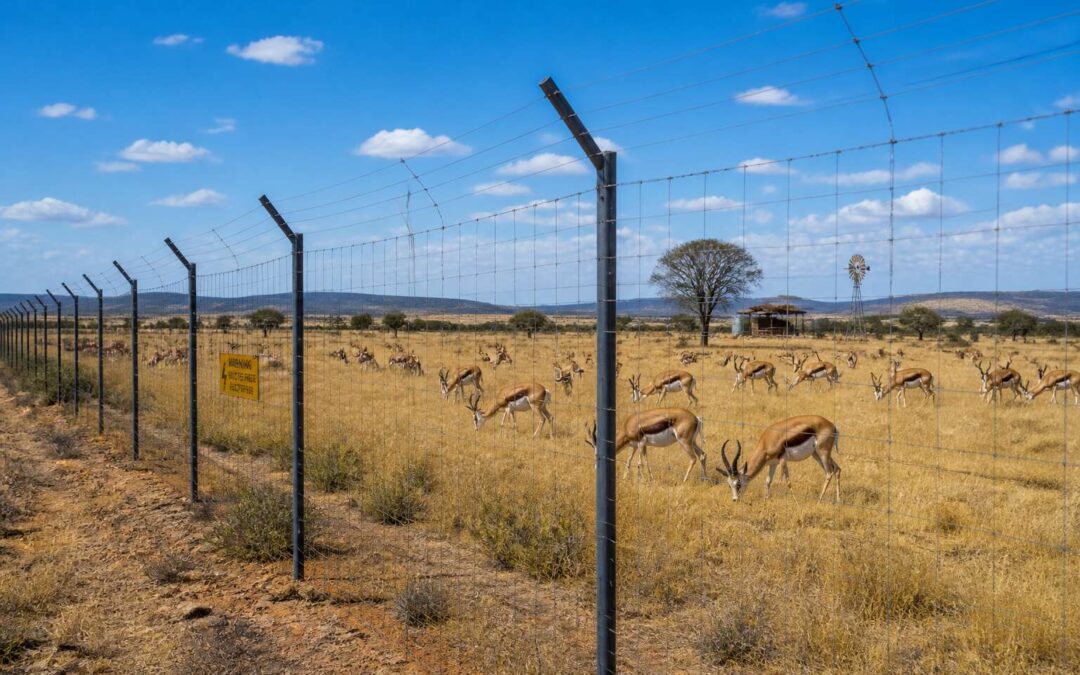
Choosing the Right Enclosure for Wildlife
Choosing the right enclosure for wildlife starts with a hard look at your land. I have watched ranchers ignore slope and soil type, only to redo their game farm fencing within three years. The fence must match the animal’s instinct. A springbok will clear a low barrier, while a bushpig will dig underneath. So measure both height and depth before you commit.
For most South African properties, the practical choice depends on these key variables:
- Species behaviour and escape tendencies
- Rainfall patterns that affect post stability
- Existing vegetation that can obscure or damage wire
Your game farm fencing should also allow for future changes in stock. What works for blesbok may prove useless for eland later. Plan for that flexibility now, not after a costly breakout.
Installation Best Practices for Perimeter Security
Game farm fencing is decided in the trench, not the brochure. One crooked post can undo a kilometre of tension. In South Africa, where kudu test your work daily, installation best practices start below the surface. Set corner posts in concrete, deeper than frost lines, and brace them with H-beams. A fence is only as straight as its anchors.
We tension wire gradually, never all at once. Work from the middles to the ends, and check droppers for true vertical every few metres. Skip this and you’ll spend weekends chasing sag.
For wildlife, the sequence matters:
- Set the post line before unrolling anything.
- Use droppers every 2 metres to prevent hoof damage.
- Walk the fence at dusk to spot weak points.
A taut perimeter keeps game in and poachers out. A slack one simply invites trouble.
Long-Term Maintenance and Durability
The harsh South African sun does not forgive neglect. A game farm fencing system that seems unyielding today can weaken silently, season by season. I have walked miles of boundary lines and learned that longevity lies in the small routines we often postpone. Tension needs checking after every thunderstorm! Gate hinges require grease, and anchor posts need a firm hand to test their grip in the soil.
- Inspect the wire for fatigue at brace corners
- Replace any rusted droppers before they snap
- Clear encroaching vegetation that can lift the bottom line
These actions are unglamorous, yet they determine whether a fence serves the land for decades or fails within years. A well maintained game farm fencing can outlast three poorly cared ones. That is the simple truth of ground and steel. The fence does not boast; it simply endures.
Compliance and Safety Considerations
In South Africa, a single breach in game farm fencing can lead to disaster, both financially and legally. Provincial ordinances dictate specific height, strength, and visibility standards. Ignoring them isn’t just risky, it’s a direct threat to your animals and neighbouring communities. I have seen operations lose their credibility overnight because a fence failed during a storm.
Responsibility does not end with installation. Regular inspections are non-negotiable, especially after heavy rains. You must check for undermining, snapped wires, and stressed poles. A proactive approach protects your investment, and it prevents horrific incidents.
– Verify that all gates are secure and self-closing.
– Confirm that the fence line is clear of fallen trees and brush.
– Document every repair for your insurance and regulatory records.
Safety hinges on this vigilance. When you treat game farm fencing as a living system, you create a secure environment for both wildlife and people. That peace of mind is worth the effort.