
How Durban’s Climate Impacts Your Choice of Boundary
The Effect of Salty Sea Air on Metals
Durban’s maritime atmosphere carries salt inland for kilometers, and that salt changes everything about metal selection. Ordinary mild steel can show rust within months of exposure to sea spray. Summer humidity compounds the aggression. The right fencing material Durban homeowners choose depends on this corrosion calculus.
Metals behave differently under chloride assault. Zinc-aluminium coatings protect steel by sacrificing themselves over time. Grade 316 stainless steel resists pitting from chlorides effectively. Aluminium forms a passive oxide layer that self-heals when scratched.
Consider these proven options:
– Hot-dip galvanised steel with a thick zinc layer
– Grade 316 stainless steel for high-exposure zones
– Powder-coated aluminium for lightweight durability
A fence is a long-term commitment. Matching the metal to the microclimate matters more than aesthetic appeal. Salt air respects no warranty, and the coastal environment demands a material that accepts this reality without compromise.
Corrosion-Resistant Coatings and Treatments
Humidity in Durban does not simply wet a fence. It drives moisture into every microscopic crevice of a boundary, where treatments face their true test. Paint alone fails here. The substrate beneath needs a strategy.
For fencing material Durban property owners should consider coatings that work with the climate. Powder coating forms a continuous barrier, while zinc-rich primers offer sacrificial protection where scratches occur. Edge cases matter most! Cut ends and weld points demand extra attention, because corrosion begins exactly there.
- Thermal spraying for galvanised finishes
- Epoxy primers beneath topcoats
- Sealing all drilled holes with zinc paste
Corrosion pathways follow moisture, and a proper treatment plan addresses every access point. The result is a boundary that weathers Durban’s conditions season after season.
Humidity, Rainfall, and Timber Performance
Durban’s rainfall exceeds 1,000mm annually, but humidity between storms does the real damage to timber. Wood never fully dries here. It absorbs ambient moisture, swells, and hosts fungi that decompose its fibres. Choosing the right fencing material durban means understanding this slow decay, not the dramatic storm.
The grain itself is a network of capillaries. Moisture enters through end cuts and drill holes, then travels deep. Hardwoods like Rhodesian teak resist naturally, while softer species need pressure preservatives. I have seen fences fail in three years because the end grain was left exposed!
- Sealing end grain blocks capillary water uptake
- Heartwood resists decay far better than sapwood
- Install timber with moisture content below 18%
This wet dry cycle is relentless. Each expansion and contraction creates micro cracks that channel moisture deeper. Surviving one rainy season proves little for fencing material durban. The true test is years of persistent moisture.
Simple Maintenance Tips to Extend Lifespan
Durban’s climate does not just challenge timber; it sets the rules for every boundary decision. Humidity sits at 80% for most of the year. This is not a neutral environment. It actively drives material fatigue. Your choice of fencing material durban must account for this persistent dampness, a reality that shapes both performance and cost over time. Metal, despite its advantages, still faces issues from condensation in coastal mist. Composites, however, handle this moisture cycle with more composure.
The sun is another factor. When the humidity clears, the UV index is brutal. This combination of wet and intense heat accelerates the breakdown of surface finishes. Paint flakes off the substrate, exposing it to the next rain cycle. A boundary that looks acceptable after one summer can look tired after three.
Maintenance here is about timing and consistency. The natural expansion and contraction of materials can loosen fixings quickly.
– Check for moisture trapped between panels and posts. This is where decay starts.
– Look for movement or creep in the structure after heavy rain, the ground shifts when saturated.
– Examine the joins where different materials meet, especially where concerns about expansion are real.
These inspections are quick but decisive. They tell you whether your fencing material durban is enduring or simply waiting to fail. The effort is small compared to the cost of replacing a warped gate or a rotten post. A fence in Durban asks for attention, not neglect.
Popular Types of Boundaries for Durban Properties
Steel and Aluminium Palisade Options
Nearly seven out of ten new boundaries in Durban’s coastal belt use palisade fencing. That is no accident. High winds and saline air demand a pragmatic answer. When evaluating fencing material durban, two dominant choices exist: steel and aluminium.
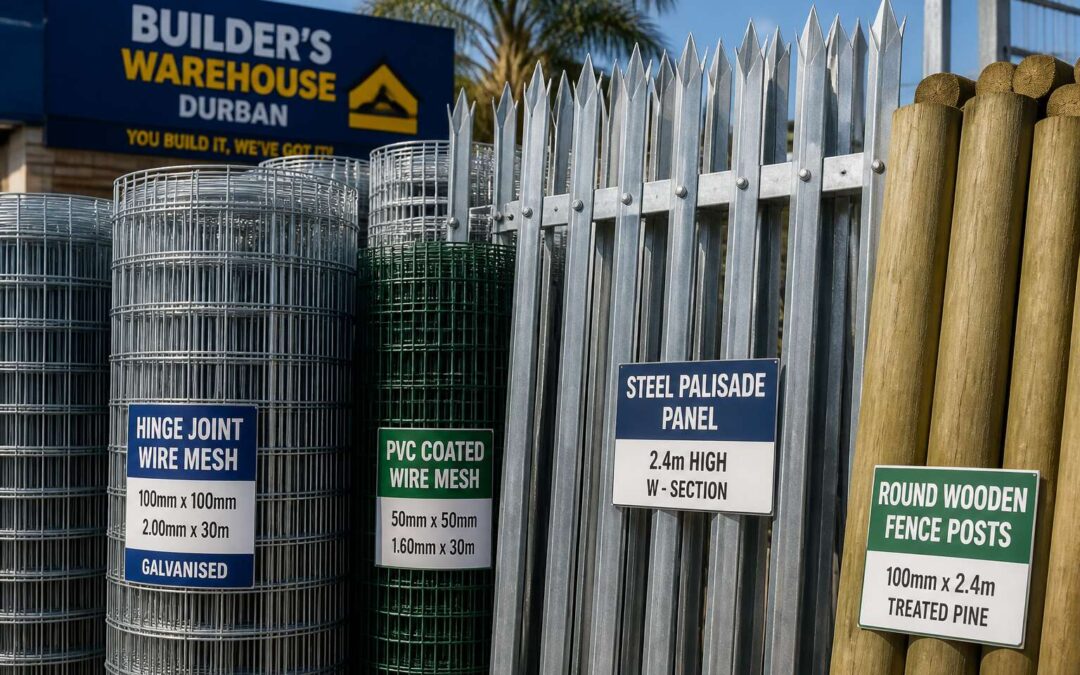
Steel palisades offer robust heft and a traditional look. However, they are heavier, requiring substantial posts and labour. Aluminium is lighter and naturally resistant to corrosion without extra coatings. It is easier to install, but it carries a higher initial price.
Core differences:
- Steel offers maximum strength for industrial sites.
- Aluminium suits coastal homes with effortless resilience.
- Both use vertical bars that resist climbing.
The visual distinction is subtle but present. Steel has a matte, heavy finish. Aluminium looks brighter and cleaner. Your choice dictates upkeep and the plot’s character. In my experience, the right fencing material durban aligns with the property’s specific exposure and security needs.
Timber Screens and Latticework
Timber screens hold a peculiar allure in Durban. They soften boundaries, casting shifting shadows that change with the salt-laden breeze. Latticework, with its diamond voids, offers a half-seen world beyond the property line. It is a romantic choice, but one that demands respect for the climate.
For those who choose this fencing material durban, the options are specific. Hardwood varieties like balau and garapa resist decay better than softwoods. Sealing is not optional, it is survival. The lattice patterns vary too:
- Diamond grids, classic and open
- Square trellis, more formal and dense
- Vertical slats, a modern take on privacy
Each pattern changes the quality of light and observation. The right fencing material durban speaks to your tolerance for upkeep and your desire for concealment. Timber screens age beautifully or terribly, depending on the care they receive.
Precast Concrete and Brick Walls
Precast concrete walls define many Durban properties with a solidity that timber never attempts. They resist the salty air that erodes weaker options. Brick walls, meanwhile, offer a textured permanence, their clay tones warming the street front.
For homeowners weighing fencing material durban, these masonry boundaries come in distinct forms:
- Precast panels, smooth and quickly installed
- Face brick, laid in patterns like stretcher or stack bond
- Painted brick, which demands recoating in this climate
Each choice changes the property’s relationship to the road. I appreciate a precast wall’s neutral barrier, and I value how a brick wall carries character from its mortar joints and colour variations. Neither succumbs to rot, and both handle humidity with grace. That durability explains their prevalence across the city!
Composite, Vinyl, and Recycled Materials
Over a third of new boundary installations across coastal KwaZulu-Natal now specify polymer composites or recycled boards. These fencing material durban options bypass the warping that timber suffers and the rust that claims steel. I have installed composite slats that hold their colour through two full summers of equatorial sun!
- Composite planks for horizontal privacy screens
- Vinyl rail systems for garden perimeters
- Recycled plastic posts for wetland edges
Vinyl remains the smoothest surface, resisting salt deposits with a simple hose-down. Recycled materials come from post-consumer waste, moulded into dense, weatherproof profiles. Each suits a property that wants low maintenance without surrendering texture.
Combining Security with Curb Appeal
Most Durban homeowners stop thinking about their boundary once it is up. Yet this structure frames every view from inside and delivers the first impression to anyone passing. A well designed perimeter can boost property value by up to 8 percent while giving real protection against intrusion.
Common sense suggests choosing one material and sticking with it. In practice, the most compelling boundaries layer two or three systems, each doing what it does best. A solid front elevation blocks street noise and prying eyes. A lighter open section along the side lets the breeze move through the property and keeps the garden visible.
Popular combinations include:
- Masonry pillars with timber slat infill between them
- Palisade fencing positioned behind a landscaped berm
- Aluminium composite panels topped with trellis work
These pairings keep the fencing material durban relevant to modern tastes without sacrificing durability. The result reads as deliberate design, not a simple boundary line.
Important Local Considerations Before You Buy
Municipal Building Guidelines and Approval
The eThekwini Municipality can halt your fencing project before the first post goes in. Many homeowners in Durban discover this after purchasing expensive fencing material durban. The town planning scheme regulates boundary walls, and the rules differ from suburb to suburb. Your erf size, street frontage, and even the gradient of your land influence what you may build.
A front boundary wall typically needs building plan approval. Corner stands demand a visibility triangle. Properties near wetlands or the coastline face additional environmental controls. I have watched clients lose deposits on fencing material durban because they assumed approval was automatic.
Typical submission requirements include:
– A site plan showing property boundaries
– Detailed drawings of the proposed wall or fence
– The prescribed application fee
– Written consent from neighbours for shared boundaries
The approval process takes several weeks. Build that timeline into your project plan. The cheapest quote means little if it violates the conditions attached to your title deed.
Soil Type and Installation Challenges
Clay soils in certain Durban suburbs swell and shrink with the rain. That movement shifts fence posts and cracks concrete footings. Sandy coastal ground, on the other hand, offers little grip, so posts may lean after the first storm. Before you choose fencing material durban, dig a test hole and feel the soil.
- Expansive clay in areas like Kloof and Hillcrest
- Loose sand along the coastal plain
- Compact shale on the ridges
Each type demands a different installation method. Deep footings, augered holes, or extra bracing are not optional if you want a straight fence in five years. I have seen expensive panels ruined because nobody checked the ground first. That is a costly mistake to bury.
Supplier Availability Across Durban Areas
Supplier availability shifts across Durban’s geography. A hardware store in Umhlanga may stock coastal grade steel, but the same fencing material durban catalogue might not reach Pinetown until Tuesday. Local distributors cluster near the port and along the N2 corridor. That convenience disappears in outlying suburbs.
For example, the Durban North area offers several specialist fence yards, while the South Durban basin prioritizes industrial suppliers. If you live on the Berea, you can compare prices within a few kilometers. Out towards Cato Ridge, your choices shrink to one or two general dealers. Before you buy, call ahead. Ask about:
- Current stock holding
- Delivery radius and cost
- Lead time for special orders
A quoted price means nothing if the truck won’t cross your suburb’s bridge.
Planning Your Budget and Installation
Cost Ranges for Different Solutions
Budgeting for a new boundary wall requires more than comparing quotes. The true cost of your fencing material durban project includes site preparation, removal of old structures, and labour rates that vary across Durban. When pricing fencing material durban suppliers, I have seen clients avoid invoice shock by planning for these extras upfront.
Current market ranges give a rough idea:
- Steel palisade installations run between R450 and R750 per linear metre.
- Timber screens land in the R350 to R600 range, with treatment adding 10% to 15%.
- Precast concrete walls start around R800 per metre and climb quickly.
- Composite and vinyl options exceed R1,200 per metre.
The variance reflects ground conditions, machinery access, and terrain complexity. A flat site in Phoenix costs far less than a sloped property in Westville. Itemised quotes from three suppliers allow line-by-line comparison rather than a single bottom figure.
Hiring Experienced Local Contractors
Planning your budget begins with a walk of the boundary line. I always advise clients to factor in a 10% contingency because Durban’s soil has a habit of surprising you. The fencing material Durban suppliers quote on the surface, but what sits beneath the ground moves your final number.
Hiring experienced local contractors matters as much as the material you select. A team that knows Berea’s clay and Bluff’s wind patterns will install a stronger fence with fewer delays. They also handle the inspection process without drama.
- Check their previous installs in your suburb
- Ask about their plan for rock or waterlogged ground
- Confirm they carry public liability insurance
These questions separate a smooth installation from a drawn out one. The right fencing material Durban choice in the hands of the wrong crew becomes a costly repair job.
Understanding Quotes and Contracts
The quote arrives with numbers that seem precise, but the final invoice often tells a different story. Around 40% of fence installations exceed their initial estimate, a figure that climbs when the paperwork holds hidden clauses. That gap begins where the fine print grows vague, and Durban’s coastal pricing only sharpens the blade.
Planning your budget for fencing material durban projects means reading every line as if it carries a cost you cannot see. A tonne of steel palisade gets quoted separately from transport, or footing excavation appears as a later addendum. I tell clients to demand unit prices and itemised breakdowns, never a simple package total.
– Check for hidden delivery or disposal fees
– Verify the exact warranty period and what voids it
– Confirm the payment schedule before any site work starts
Contracts carry their own weight after the handshake. Understanding quotes and contracts prevents the midnight call where a supplier claims the material delay was always written into the terms. Durban’s weather and your patience both have limits, so push for clarity before you commit to that dotted line!
Avoiding Common Installation Pitfalls
Planning a budget for fencing material durban requires more than comparing metre rates. The true cost emerges from preparation work: clearing overgrown verges, levelling uneven ground, and managing stormwater runoff. Set aside a contingency of at least fifteen percent, because hidden obstacles rarely announce themselves politely.
Installation failures share a common thread: haste. Posts aligned by eye rather than string line produce waves that no material can hide. Concrete mixed too wet takes weeks to cure properly, and a gate hung before the frame settles will drag within a season. Even quality fencing material durban cannot survive poor workmanship.
Common pitfalls to avoid:
– Digging without confirming servitude lines first
– Fixing rails at the wrong height for the slope
– Forgetting drainage gaps at ground level
Each mistake compounds the next, turning a straightforward project into an expensive correction.
Long-Term Value and Environmental Impact
Eco-Friendly and Recycled Alternatives
A fence in Durban is a decade-long commitment. The true cost of an installation is not the invoice alone, but the cumulative weight of repairs, replacements, and resources consumed. I have watched homeowners replace cheap palisade three times before a recycled composite system paid for itself. Eco-friendly and recycled alternatives reduce this strain without sacrificing strength.
Recycled plastics and composite boards resist moisture with no chemical treatments. Reclaimed timber offers character after proper kiln drying. Repurposed steel returns as durable palisade components. When comparing fencing material Durban options, these alternatives often deliver a lower cost per year of service than their virgin counterparts.
Seek out fencing material Durban suppliers who stock these options. You shorten supply chains, lower landfill pressure, and support circular economies. The long-term value is measured in avoided waste and steady performance.
Lifespan Expectations for Coastal Properties
On the Durban coast, a fence either becomes part of the landscape or an eyesore within five years. The lifespan of your installation depends entirely on the marriage between material and environment. A steel palisade might last decades, but its coating will wear differently 200 meters from the surf than it does in the Berea suburbs. Likewise, timber that thrives up the coast rots quickly in the humid south. The lifespan expectation for coastal properties demands a ruthless assessment of your specific microclimate.
The environmental impact of your choice extends beyond the factory. Shipping heavy precast concrete from a supplier in Pinetown to Umdloti burns fuel, while locally sourced recycled composite boards travel a fraction of the distance. When weighing fencing material durban options, you are effectively choosing between long-term durability or frequent replacement. That choice carries hidden costs:
- Recycled plastic systems last up to 25 years with zero chemical treatment.
- Galvanised steel palisade requires re-coating every 8 to 10 years to remain viable.
- Reclaimed hardwood, once properly sealed, outlasts new softwood by a wide margin.
The financial logic of coastal fencing shifts when you calculate the cost per year rather than the invoice price. A cheap option failing every six years creates three times the landfill waste of a premium system lasting two decades. For a coastal property, the real value emerges not in the initial purchase but in the avoided environmental toll of repeated manufacture and transport. The fence that stands firm through the salty air with minimal intervention is the one that serves both your wallet and the coastline.
How Your Choice Affects Resale Value
When prospective buyers drive up to a Umhlanga property, they see the fence first. A rusted gate or warped timber screen silently subtracts from the asking price before anyone steps inside. The choice of fencing material durban carries practical weight; it signals how well the property has been maintained.
A faded palisade looks tired. A sturdy composite boundary reads as ready to occupy. Buyers factor replacement costs into their offers, so a cheap fence installed five years ago can cost you more at the sale table than it saved at the outset.
- Durable materials like galvanised steel or recycled composite hold their appearance for over a decade.
- Perishable options, such as untreated softwood, often trigger price negotiations once decay appears.
That negotiation margin is the quiet influence of your original selection. Sellers get the highest return from choosing fencing material durban buyers recognise as low maintenance and long lasting.
Noise, Wind, and Privacy Benefits
A fence in Durban works harder than most people realise. Over twenty years, the right fencing material durban absorbs gusting south-westerlies, softens traffic hum, and gives a garden a private space for early morning coffee. Long-term value is measured in what the barrier spares you: noise, wind, and prying eyes.
Consider the acoustic difference between a solid composite panel and chain-link. The panel deadens sound. Chain-link lets every bakkie engine through. A slatted timber screen with small gaps lets gusts pass without causing a blustery swirl on the patio. Solid walls stop wind but create turbulence.
- Composite and vinyl panels reduce noise and block sightlines.
- Slatted timber breaks wind while keeping airflow.
- Brick walls offer privacy but can amplify wind pressure.
The lasting value of your fencing material durban sits in how well it handles these daily conditions.