
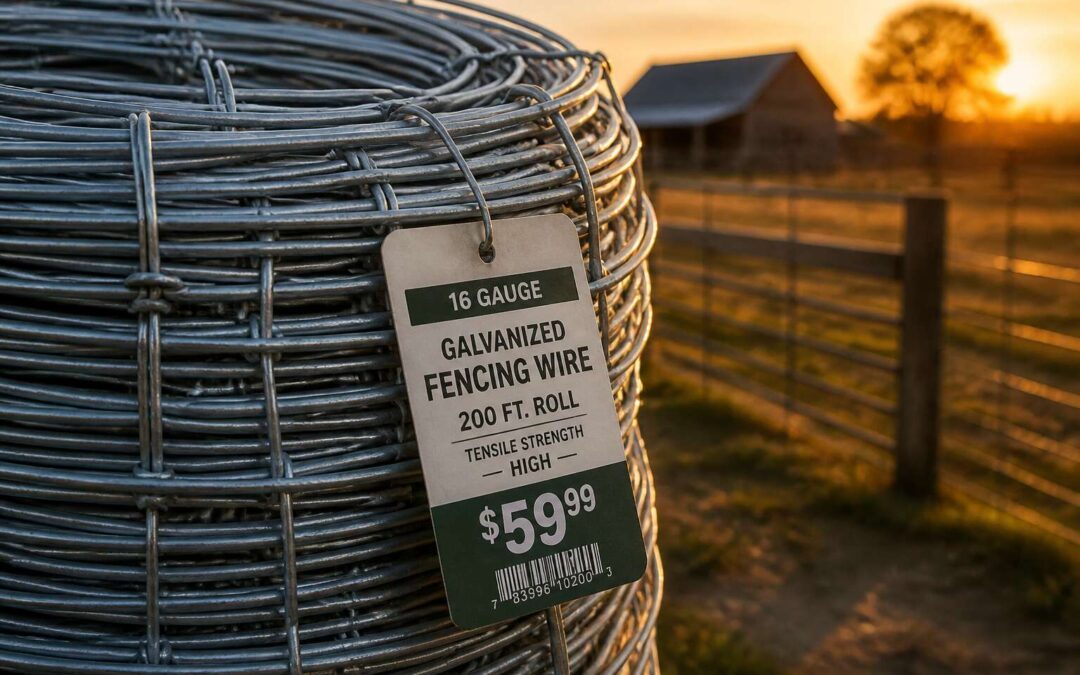
Key Drivers Behind Wire Cost Fluctuations
Raw Material Trends
Key drivers behind wire cost fluctuations hinge on raw material trends. Steel prices sway with global iron ore supplies, particularly from Australia and Brazil. When mines face disruptions, costs flow through to fencing wire prices. Additionally, energy costs, like coal for furnaces, mirror economic cycles in Asia. In South Africa, we contend with import tariffs and port bottlenecks. Local scrap shortages can spike prices during high construction demand. Consider these inputs:
- Iron ore and coking coal, setting baseline steel costs
- Zinc for galvanising, linked to mining output
- Fuel surcharges on trucking, varying with crude oil
Exchange rates add unpredictability. A weaker rand makes imported wire pricier, forcing farmers to rethink budgets. Raw material trends shape every metre of fencing wire prices.
Supply Chain Dynamics
Global shipping lanes are congested, and that delay is not just an inconvenience. For South African buyers, port congestion at Durban and Cape Town directly stretches lead times. When a vessel misses a berth, the resulting backlog adds weeks. Trucking fleets face their own bottlenecks, from road toll hikes to driver shortages. These logistics pressures stack onto every coil of wire.
Consider the ripple effects:
1. Container shortages inflate freight rates.
2. Rail derailments on the coal line force more loads onto trucks.
3. Border delays at Beitbridge slow imports from Zimbabwe.
Each of these factors independently nudges fencing wire prices upward. Farmers and contractors often absorb the uncertainty, but the supply chain math is unforgiving. With limited local production capacity, any distribution snag becomes a price signal. The market moves on news of the next strike or storm, not on wishful thinking.
Seasonal Demand Shifts
Winter in the Free State changes the market. Livestock farmers repair camps before the first frost, and that sudden rush of orders pushes fencing wire prices up by a measurable margin each May. The demand curve is predictable but not gentle. Buyers who wait for the rain to break often pay more.
Summer brings its own pressure. Maize farmers erect new paddocks after harvest, while game farms expand boundaries before the high tourist season. These overlapping cycles create a bidding war among suppliers.
- Autumn repairs drive a 15% spike in order volumes.
- Spring planning triggers early bulk purchases.
- Year end slowdowns offer rare price relief.
Timing matters more than haggling. When the season turns, fencing wire prices follow with little warning.
Tariffs and Trade Policies
Nothing moves fencing wire prices like a tariff announcement. The day the South African Revenue Service adjusts a ruling on imported steel, local manufacturers recalculate their entire pricing matrix. I have watched a single antidumping decision add R12 per roll before lunchtime.
Consider three policy levers that pull these prices:
- Antidumping duties on Chinese wire rod
- Local content requirements under the steel master plan
- Rand exchange rate swings when tariffs reset
Each lever sounds dry until your wallet feels the pinch. Tariffs artificially inflate the cost of imported wire, which lets domestic mills raise their own fencing wire prices without blinking. Trade policies like the African Continental Free Trade Area promise cheaper imports, but implementation lags and logistics costs eat the gain. So when you shop for wire, remember that the price tag carries more political baggage than farmyard logic.
Comparative Analysis of Wire Varieties
Galvanized vs. Stainless
When a Karoo farmer runs his hand along a fence line, he reads the story of his investment. The choice between galvanized and stainless wire goes beyond technical specifications. It is a question of soil chemistry, rainfall, and the patience to count years rather than seasons. Galvanized wire, with its zinc coating, offers a sacrificial layer. Stainless steel wire resists corrosion through chromium, a fundamental difference in protection.
For South African landowners weighing fencing wire prices, the decision involves several factors:
- The acidity of local soils, which accelerates zinc depletion
- The presence of brackish water or coastal salt spray
- The expected lifespan of the fence versus the initial outlay
Stainless steel carries a higher upfront cost, but in the highveld’s thunderstorm country, galvanized wire often proves sufficient. I have seen both fail and both thrive. The true comparison comes down to the specific land beneath your boots, and the fencing wire prices that match your long term plan.
Barbed Wire Pricing Factors
Barbed wire pricing depends on several physical variables that are easy to overlook when comparing fencing wire prices. Wire gauge matters first. A 2.0mm strand costs less than a 2.5mm strand, but the thinner option sags under livestock pressure. Tensile strength changes the equation. High tensile barbed wire uses less steel for the same breaking load, which can lower the price per meter.
Barb geometry also plays a role. Four point barbs with 10cm spacing are cheaper to produce than tighter 7.5cm spacing. Galvanised coating weight affects longevity, and heavier coatings raise the cost.
- Steel grade and tensile strength
- Barb spacing and point count
- Coating weight and zinc purity
- Roll length and packaging density
Each factor shifts the final quote, so a fair price comparison means checking every line item, not just the headline number.
High-Tensile Options
One strand of 2.5mm high tensile wire holds more than 1,100 kilograms of force, yet weighs less than the mild steel equivalent. That paradox plays out across the Karoo every season. Fencing wire prices for high tensile options read higher per meter, but the real arithmetic lives in the ground. High tensile spans 150 meters between posts; mild steel sags at 30. Fewer posts, fewer strainers, fewer hours of labour.
The tragedy appears in the corners. High tensile does not stretch kindly. It snaps, often at night, and the recoil can break a fence rider’s arm. So the honest quote accounts for handling skill.
Three figures matter when comparing high tensile varieties:
- Breaking load, measured in kilonewtons
- Elongation at the breaking point
- Coating adhesion under tension
Read those alongside the fencing wire prices, and the cheaper roll rarely survives the first wet season.
PVC-Coated Wire Costs
Salt air destroyed our old galvanized fence within two years. Switching to PVC-coated wire made the fencing wire prices seem steep at first, but the value emerged after the first wet season. A bonded PVC coating resists corrosion far longer than zinc alone, especially near coasts.
Three components decide whether PVC-coated wire earns its higher price: coating thickness, adhesion quality,and steel core strength. Thin films peel off within months, leaving bare wire to rust. Bonded coatings stick mechanically, surviving rough handling.
Consider these when comparing costs:
- Coating thickness in microns affects lifespan.
- Adhesion testing via a bend test shows peeling.
- Steel core strength determines durability.
These factors change how you read fencing wire prices. The cheapest roll often fails before the first serious storm.
Specialty Alloys
On a Free State farm, fencing wire prices for chromium-molybdenum alloy seem steep until the third year. That is when conventional wire strands begin snapping under wind fatigue. The alloy wire still holds full tension.
Zinc-aluminium alloy coatings deserve equal attention. They self-heal where scratches expose the metal, an advantage galvanised zinc cannot match. Borehole water with high salinity attacks standard wire quickly. We have seen these failures first-hand in consultations with farmers across the Eastern Cape.
- Chromium-molybdenum suits high-abrasion terrain.
- Zinc-aluminium alloy tolerates saline conditions.
- Duplex stainless steel resists acidic soil chemistry.
Each option shifts how you calculate the real cost over a ten-year horizon. The physical properties of the steel, not the marketing labels, decide the actual price per kilometre of boundary.
Geographic Pricing Patterns
Regional Market Variances
The cost of fencing wire prices in South Africa varies by region. Coastal provinces like KwaZulu-Natal often see different figures than the Highveld, where manufacturing density pulls prices down.
From my work with suppliers, the gap between urban and rural municipalities is tangible. A farm in the Northern Cape pays more per roll than a construction site in Johannesburg, purely for the distance traveled!
- Gauteng benefits from proximity to steel mills.
- The Western Cape faces higher port-related charges.
- Limpopo sees premiums due to sparse distribution networks.
These variances mean that fencing wire prices are never a single number. They are a reflection of the local landscape, both physical and economic.
Rural vs. Urban Availability
In the quiet spaces between towns, fencing wire prices change hands before they reach the farmer. Urban availability creates abundance, while rural outposts wait weeks for a single delivery. Distance is not merely kilometres; it is the empty road, the fuel, and the waiting.
I have seen price lists from both worlds. One reflects competition; the other patience. A rural buyer does not pay for wire alone. They pay for the fuel, the driver’s time, and the quiet risk that the order might not arrive.
- Urban suppliers hold stock in bulk, reducing per-unit costs.
- Rural dealers order small lots, losing volume discounts.
- Delivery windows in remote areas stretch from days to weeks.
This is why fencing wire prices in the Northern Cape can surprise a Johannesburg buyer. Availability dictates the margin! When a supplier knows you have no alternative, the number on the invoice reflects that knowledge.
Shipping and Freight Charges
A map says the steel mill is 200 kilometres from your farm. The delivery driver says it is 200 kilometres plus a missing turnoff and a pothole tax. Geographic pricing patterns mean fencing wire prices often depend on what happens between the factory gate and your gate. Freight charges are not a flat fee. They are a calculation involving fuel, tolls, and the driver’s existential dread of potholes.
Consider a few realities:
- A full truckload from Gauteng to the coast costs less per kilogram than a partial load.
- Backhaul rates drop when the truck needs to return empty, but only if the timing aligns.
- Remote locations invite a “delivery surcharge” that has no relation to distance, only to your lack of alternatives.
Shipping and freight charges quietly add 10% to 20% to fencing wire prices in rural areas. The wire itself stays the same. The road is what you pay for.
Budgeting for Installation and Maintenance
Labor Rate Estimations
In South Africa, the cost of a fence doubles once the spades hit the ground. Labour rates for erecting fencing wire can consume 40% of a project’s total budget, a figure that surprises many landowners. The installer’s skill, terrain, and run length all shift that number.
Estimation begins with a simple question we ask every client: per metre or per day? Once fencing wire prices are settled, the labour quote often holds the real surprise! Urban crews in Gauteng charge differently from those in the Free State. A rocky slope demands more hours, more tools, and a higher rate.
- Site preparation and clearing
- Post spacing and tensioning time
- Distance between the water source and the work area
Maintenance labour adds another layer. Rust, sagging lines, and storm damage require regular attention, and those callouts carry their own fees. When you budget, remember that fencing wire prices form one part of the total. The labour that stretches and splices the wire settles the invoice.
Terrain Complexity Surcharges
Budgeting for installation and maintenance requires more than a simple quote. The quote forms one line in the ledger. The terrain beneath your feet dictates the final figure. Rocky outcrops, dense bush, and seasonal wetlands each carry their own surcharge. A crew working on a koppie in Mpumalanga will charge more than one on flat Karoo ground.
- Rock drilling equipment rental
- Extra labour hours for tensioning on slopes
- Additional vehicle wear and tear
Maintenance adds another layer entirely. Sagging lines on uneven ground need frequent adjustment. Storm damage in thunderstorm season can wipe out a budget if you ignore the risk. I have seen clients budget precisely for fencing wire prices, then face a maintenance callout that exceeded the original installation cost. A slope that slows the installer also slows the repair crew. The terrain surcharge covers real expenses. Plan for the ground, and the total will not surprise you.
Hardware and Post Expenses
Fencing wire prices tell only half the story. The hardware that anchors the wire carries its own burden, often heavier than the invoice suggests. I have seen budgets collapse under the weight of forgotten posts, especially on farms where old fences sag and lean in weathered lines.
Posts, droppers, stays, and fasteners form a necessary expense. Steel posts for rocky ground, concrete droppers for long spans, galvanized staples that rust faster than expected. Each choice reshapes the final cost, and some choices demand replacement within a year!
Maintenance adds another layer. Tensioners wear out, clips snap,and post bases loosen with each storm. Fencing wire prices can be forgiving, but hardware failures are not! Budget for those silent components, or the land pays a heavier cost later.
Long-Term Upkeep Costs
Fencing wire prices often look cheap on paper, but installation alone drains resources. In South Africa, rocky soil defeats unprepared diggers,and sandy ground shifts posts without consent. I budget twenty percent extra for labor surprises!
Maintenance follows a grim schedule. Droughts crack dry ground, storms loosen staples, cattle test weak spans.
- Tensioner checks after each heatwave
- Dropper inspections for rust spots
- Post base tests before winter rains
The longterm upkeep ledger grows heavy. Repairs, replacement sections,and lost livestock haunt those who skimp. Annual reserves prove wise,for neglect compounds silently.
Permitting Fees
Permitting fees seldom appear in initial quotes, yet they shape the final ledger. In South Africa, municipal bylaws govern boundary fence heights and materials. Johannesburg and Cape Town each enforce different approval timelines. A simple residential permit might cost a few hundred rand, but commercial agricultural fences often require environmental assessments. That process takes months.
Before submitting anything, I verify three things:
- Title deed restrictions on fence type and placement
- Municipal setback requirements from property lines
- Heritage or conservation overlays in the area
Surveyor fees for boundary confirmation run between R1,500 and R4,000. I budget for these approvals before ordering materials, because fencing wire prices fluctuate while paperwork crawls. A rejected application means stored coils and wasted time.
DIY vs. Contractor Pricing
Standing in the veld with a tape measure, I have learned that installation costs often outweigh the wire itself. DIY fencing demands time, tools, and a back that remembers every strainer post. Contractor pricing includes labour, tensioning equipment, and the quiet assurance that the line stays taut through August storms. For a smallholding, DIY can halve the budget, but fencing wire prices remain the stubborn variable. If you buy when fencing wire prices dip, you save. If you hire, ask for a per-metre rate that includes anchors and gateposts.
Consider the hidden chores: cutting brush, digging holes, splicing breaks. A contractor handles these. DIY means weekend labour under a highveld sun.
- DIY: R8 to R15 per metre for labour equivalent
- Contractor: R25 to R45 per metre installed
That gap narrows once you factor in broken tools and rework. For most, the honest calculation compares your own sweat against the certainty of a professional finish.
Strategies to Optimize Your Wire Investment
Alternative Material Selection
Fencing wire prices often tempt buyers toward the cheapest coil. But the true cost emerges over decades. In South Africa, where sun and soil corrode steel quickly, alternative materials deserve scrutiny. Aluminium wire resists rust but lacks tensile strength. Polymeric composites flex under impact yet cost more per metre. Recycled steel offers a lower carbon footprint, but inconsistent quality can create weak points. Consider these trade-offs:
- Assess site-specific corrosion risk with a simple salt-spray test.
- Compare total installed cost, including tensioning tools and lifespan.
- Check local scrap value; theft-resistant alloys may increase security.
Optimising your investment means matching material to your land’s reality, not just fencing wire prices today.