
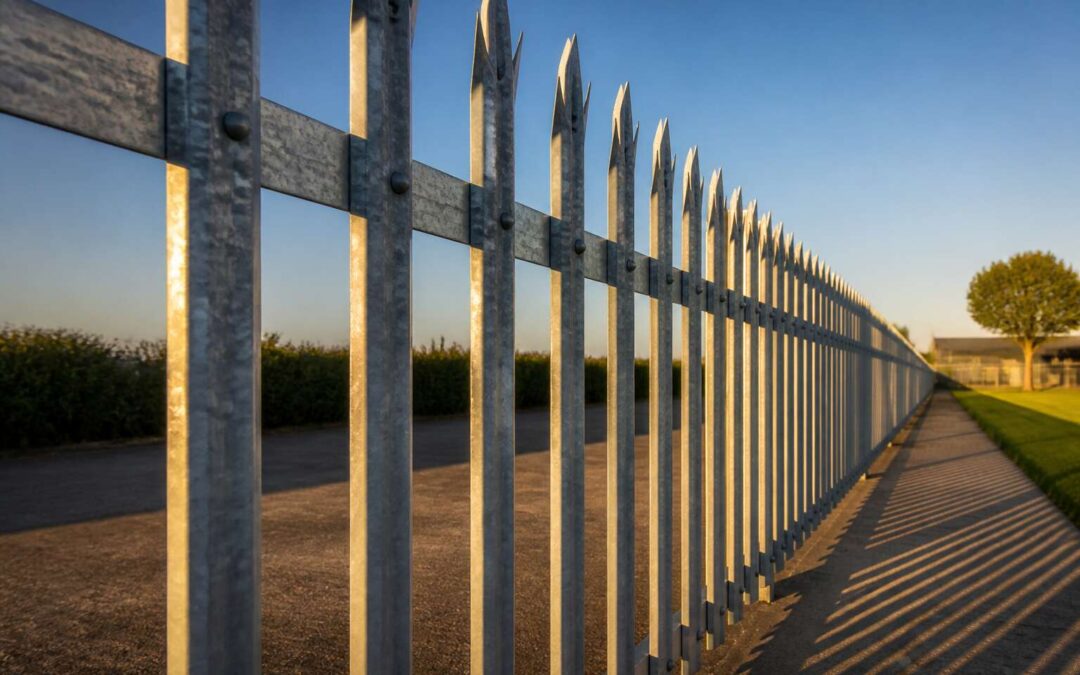
Factors Influencing Palisade Fencing Cost Per Meter
Material Quality and Coating Type
Steel thickness dictates the palisade fencing cost per meter more than any other factor. A 3.2mm blade survives a drunk driver, while 2.0mm bends under a determined thief. South Africa’s wind and rain punish thin materials quickly.
Compare these specifications before you request a quote:
- Steel grade (S355 vs S275)
- Zinc coating method
- Finish layer thickness
Coating type separates a 10-year fence from a 20-year one. Hot-dip galvanization coats corners and welds properly. Electro-galvanization is cheaper but leaves gaps. Powder coating looks smart but chips. Under 85 microns of zinc means you will repaint soon.
Fence Height and Gauge of Steel
The height of your fence alters the palisade fencing cost per meter in blunt ways. A 2.4 meter fence calls for roughly a third more steel than a 1.8 meter one, and that extra weight carries a price tag. Taller fences also need heavier posts and deeper foundations to resist wind leverage, which pushes the rate higher.
Gauge creates a second variable. Everything comes down to that steel’s thickness. A low fence can use thinner material and feel sturdy, but once the fence stands high, the steel must bear more load. So when suppliers quote a 2.4 meter height with 3.2mm blades, they are pricing two choices at once. Understand both, and you will see exactly where the palisade fencing cost per meter goes.
Post Spacing and Rail Configuration
The distance between posts shapes the final price more than most buyers expect. Standard palisade fencing uses 2.4 metre post spacing, but some sites call for 1.8 metre centres on uneven ground. Every extra post brings concrete, digging, and labor. Multiply that across a boundary and the palisade fencing cost per meter climbs.
Rail configuration works the same way. Two horizontal rails suit residential lines. Three rails, often with a V profile, serve commercial perimeters. Each rail adds steel and welding time. Blade fixing patterns also matter. Some use through bolts, others welded clips. Here is what changes the rate:
- Number of rails, usually two or three per panel
- Post spacing, wider spans lean on heavier posts
- Rail type, square tube, channel, or angle iron
All of it feeds the final palisade fencing cost per meter.
Site Conditions and Accessibility
Rough terrain can turn a routine fence line into a two day ordeal. A flat, open stand allows augers and delivery trucks to work efficiently. Rocky ground requires jackhammering or rock drilling, which adds hours to every hole. Steep slopes demand stepped panels and custom post lengths.
Accessibility is another variable that buyers overlook. Narrow gates, overhead power lines, or soft lawns force crews to hand-carry materials. That slows the job and inflates labor charges. Consider these factors:
- Rocky or calcrete-rich soil requiring heavy equipment
- Sloped terrain needing stepped or staggered installation
- Limited access for vehicles and machinery
Each of these directly raises the palisade fencing cost per meter, often by 10 to 20 percent.
Labour Costs and Regional Variations
The variance in labour rates alone can shift the palisade fencing cost per meter by a factor of two. This is not a commodity purchase; it is a skilled trade. A competent installer commands a premium because they manage the intricacies of alignment and security without leaving gaps that invite opportunists.
Regional variations in South Africa are the true wildcard. The palisade fencing cost per meter in Gauteng often reflects a highly competitive market with many suppliers. Conversely, a remote Northern Cape farm might see quotes jump to cover the crew’s travel time and diesel. Consider these price drivers:
1. The prevailing wage for welders and installers in your province.
2. The distance from the nearest major steel stockist to your site.
3. The level of local competition among fencing contractors.
Transport alone can add a significant margin to materials. A quote in Durban might include harbour surcharges, whereas a quote in Polokwane must absorb trucking costs from the south. Always ask for an itemised breakdown, as a single lump sum often obscures these regional realities. Comparing a single national figure for the palisade fencing cost per meter is useless without understanding your local market’s temperature.
Average Palisade Fencing Prices by Material and Style
Galvanized vs. Colorbond Steel Pricing
The palisade fencing cost per meter shifts with the steel’s finish. Galvanized steel arrives in muted grey, raw and unadorned. Colorbond carries a factory-baked colour, a darker presence that resists the sun’s bleaching. I have seen both on the same street. The distinction is stark.
Galvanized dulls with age. It accepts rust. Colorbond holds its colour, standing as a fixed shadow against the fence line. That permanence inflates the price!
Here is the cost comparison:
- Galvanized: lower initial palisade fencing cost per meter.
- Colorbond: higher price for the enduring finish.
The gap is simply the cost of durability.
Standard Palisade vs. Security Palisade Costs
Drive through any neighbourhood and the fence tells you the story before the house does. A standard palisade presents wide set pickets, honest and economical. The security palisade draws those pickets close, tips them with points, and braces them with thicker rails. That refinement reshapes the palisade fencing cost per meter.
Standard styles settle between R450 and R600 per meter. Security versions move from R700 upward. The price difference comes from extra steel, tighter manufacturing, and stronger posts. The palisade fencing cost per meter rises with every added layer of deterrence.
- Standard palisade: simpler linework and lower maintenance outlay
- Security palisade: sharper deterrent and higher upfront expense
Security palisade units also demand deeper foundations and reinforced concrete, pushing the total higher. Standard units fit shallow beds. The final figure mirrors the threat you anticipate, not merely the style you admire.
Flat Top, Spear Top, and Angled Top Design Price Differences
Flat top palisades carry the quietest price. The rail ends are cut straight, no forging, no extra steel. This style holds the palisade fencing cost per meter at the lower end of the scale. Spear top demands more work. Each vertical is cut, tapered, and pointed. That added labour and material pushes the price upward. Angled top takes the spear and folds it. The bend creates a sharper silhouette, but it also consumes more steel per panel. I have watched installers handle these three styles side by side, and the difference is not trivial.
– Flat top: simplest cut, lowest cost.
– Spear top: pointed finish, mid range price.
– Angled top: folded steel, highest expense.
Angled top also requires jigs to maintain uniform bends. That manufacturing step adds to the palisade fencing cost per meter. Choose the style that matches your perimeter, but know that every point and fold carries its own price.
DIY vs. Professionally Installed Palisade Fencing
Somewhere between the low quote that makes you suspicious and the high quote that makes you wince, there is a real palisade fencing cost per meter. South Africa’s fencing market fluctuates with demand, competition, and steel prices, often without logic. The average homeowner usually discovers this when the third supplier quotes double the first one!
Average palisade fencing prices by material and style differ depending on who does the work:
- DIY: steel panels and posts, plus your own labour.
- Professional: materials, transport, installation, and usually a guarantee.
- Hybrid: DIY installation with a professional welder hired by the hour.
DIY promises savings and delivers blisters. I once saw a homeowner install a full palisade line over a weekend, only to watch the gate sag because the gate post was three centimetres too short. Professional crews charge more, but they also own their mistakes. That ownership has value. The average palisade fencing cost per meter from a professional includes the quiet luxury of not having to redo it next summer.
Installation Costs and Additional Expenses
Labour Rates for Palisade Fence Installation
Labour rates for palisade fence installation can consume up to 40% of your total spend. That figure climbs higher when crews work with precast concrete or reinforced posts. I always advise clients to ask for a breakdown of hours versus materials, because many quotes do not show them separately.
Additional expenses arise from site preparation. Uneven ground requires levelling. Dense soil demands mechanical augers. Each adds a separate line item.
- Concrete for post anchoring
- Cutting discs and drill bits
- Travel or fuel surcharges
These extras can push the palisade fencing cost per meter by 10% to 15%. Get a written estimate that lists every charge, or you will face surprises.
Concrete, Posts, and Fixings Costs
Concrete alone can account for a significant portion of the total. Every post hole demands a mix that sets firmly, and the volume grows quickly across a long boundary. Posts carry their own price tag, with heavier steel sections costing more per unit than lighter alternatives.
Fixings seem minor until you multiply them across dozens of rails. A typical install needs:
- Galvanised brackets for each rail connection
- Bolts and nuts matched to the post gauge
- Spacer washers to keep panels aligned
Together, these components shape the palisade fencing cost per meter.
Installers often quote a bundle price, but I prefer itemised estimates. When contractors include concrete delivery, transportation, and waste disposal, the line items add up. Ask whether the quote covers all fixings or only the fence panels. That distinction alone shifts the palisade fencing cost per meter by several rands.
Removal and Disposal of Existing Fencing
Installation costs rarely end at the gate. Once the crew arrives, the ground determines the pace. Rocky soil demands extra drilling time, and sloping terrain forces stepped panels that consume more steel and labour. These hidden tasks quietly push the palisade fencing cost per meter above the advertised baseline. A reputable installer will walk the boundary before quoting, but even then, expect variables to surface mid-job.
Removal and disposal add another layer. If a tired fence already occupies the line, it must come down first. Contractors often charge per load for debris, and landfills in South Africa levy their own fees. Consider the work involved:
– Stripping old panels and rails
– Extracting concrete-encased posts
– Hauling scrap metal or treated timber to a disposal site
Each step carries a cost. A quote that omits removal might look cheaper, yet the palisade fencing cost per meter rises once the old structure is cleared and hauled away.
Council Permits and Compliance Fees
Before the first post is set, a quieter expense often appears: council permits. Many homeowners assume a boundary fence needs no paperwork, but South African municipalities frequently demand approval for installations above a certain height or along public lines. This compliance step adds a layer of administration to the overall palisade fencing cost per meter. I have seen quotes balloon once property owners discover their chosen fence height requires formal municipal sign-off. Fees vary by region, and the process can test patience. Some councils request site plans, others require proof of ownership.
Compliance fees might include:
– Building plan submission charges
– Inspection fees after installation
– Penalties for work completed without approval
Skipping these steps invites fines or forced removal, making the eventual palisade fencing cost per meter heavier than any initial estimate suggested.
Cost of Custom Gates and Accessories
The palisade fencing cost per meter only tells part of the story once installation begins. A contractor’s crew must dig holes, set posts, align rails, and tension everything correctly. Each step carries its own price, and custom gates transform a straightforward quote into something more personal. A gate is not a fence panel. It carries hinges, locks, and sometimes a motor.
Common additions that alter the final figure:
– A pedestrian gate with a sturdy lock
– A vehicle gate with wheel guides
– Automation kits for remote access
– Anti-lift brackets and drop bolts
Each accessory adds labour and material cost to the overall palisade fencing cost per meter. The gate itself often costs more per metre than the fence line, simply because it requires more engineering and more attention on site. I have watched homeowners choose a modest fence, then double their budget on a custom gate with sliding gear and intercom wiring.
Site Preparation and Ground Leveling Charges
The ground beneath a fence rarely behaves. Rocky soil, clay, or a sloping plot can turn a simple installation into a slow process. Contractors charge for this preparation separately from the palisade fencing cost per meter. Levelling a section of land, clearing rubble, or cutting through tree roots all add hours to the job.
Site preparation often requires machinery. A small digger or plate compactor carries its own hire fee, and the operator expects to be paid. If the ground is hard, post holes take longer to drill. If it rains, the crew might wait a day. These delays appear on the invoice.
- Soil testing for load-bearing capacity
- Clearing grass, bushes, or old rubble
- Cutting and levelling slopes
The palisade fencing cost per meter quoted upfront rarely includes this work. Ask for a breakdown before signing, because the final amount depends on what lies beneath the surface.
How to Calculate Total Palisade Fencing Cost for Your Property
Measuring Your Fence Line in Linear Meters
Measuring your property line correctly is the groundwork for any accurate quote. The palisade fencing cost per meter only becomes meaningful once you know your exact linear meters. Walk the boundary, note every corner, and treat gate openings as separate measurements.
Break the line into straight segments. Obstacles like trees or uneven ground extend the run, so measure along the actual fence path, not the shortest route. A simple method works best:
- Use a measuring wheel for accuracy on long runs
- Add 10% for offcuts and waste
- Record every reading in meters, not feet
Once you have the total, multiply it against the quoted palisade fencing cost per meter for a baseline figure. Most suppliers in South Africa price per linear meter, so a precise measurement protects you from surprise overruns when the final invoice arrives.
Estimating Material Costs Based on Per-Meter Rates
Multiplying your linear meter total by the palisade fencing cost per meter feels like simple arithmetic, until you encounter the real world’s fondness for surprises. The quoted rate often assumes a flat, clear site, which your property may not be. Estimate materials separately from installation to avoid conflating two very different numbers.
A practical calculation involves:
1. Confirming the per meter rate includes posts, rails, and brackets
2. Adding concrete and fixing costs at roughly 15% of the material figure
3. Applying a contingency of 10% for offcuts and site quirks
The palisade fencing cost per meter rarely covers gate motors or locking hardware, so itemize those separately. When the final invoice arrives, you want the only surprise to be how well you estimated.
Adding Installation and Site Preparation Expenses
The price on a supplier’s pricelist is rarely the final figure you pay. The palisade fencing cost per meter quoted upfront often excludes the messy work: clearing, digging, and levelling your site before the first post goes in. Installation and site preparation commonly add a third to the material cost.
Site preparation costs vary with your property’s state:
- Rocky ground demands mechanical digging before post holes can be set
- Dense vegetation requires clearing and disposal
- A steep slope creates levelling and stepped panel labour
Installation labour covers fitting posts, rails, and panels. Concrete for post setting, brackets, and fixing hardware are itemised separately. When you calculate the total, start with the quoted per meter rate, then add preparation and labour figures. The gap between the quote and the invoice shrinks when you plan for these expenses.
Cost-Saving Tips and Budget Planning for Palisade Fencing
Choosing the Right Time for Installation
Timing can be a quiet factor in your budget planning. In South Africa, winter months often bring lower demand for fencing contractors, which can nudge the palisade fencing cost per meter down if you are flexible. Installers may offer better rates when their schedules are not packed with summer projects. But avoid rushing a decision. Consider your specific installation window:
– Order materials in the off-season to lock in prices before steel adjustments.
– Schedule the installation for midweek to catch contractors between larger jobs.
– Steer clear of December and January unless you enjoy paying holiday premiums.
When you plan the right window, you keep the palisade fencing cost per meter from becoming a budget surprise. A little patience with the calendar costs nothing, and it can soften the final invoice without compromising on security.
Negotiating Bulk Discounts for Long Fence Runs
Long fence lines change the arithmetic. A contractor pricing 50 meters must recover setup and transport costs within that short distance. Stretch the run to 200 meters or more, and those fixed expenses thin out across every section. That is where the palisade fencing cost per meter starts to move.
South African suppliers order steel in bulk and pass part of that saving along when you commit to a full perimeter. Ask for tiered pricing based on total linear meters. Contractors frequently lower their rate for longer runs because downtime shrinks.
- Present a single consolidated order to avoid multiple delivery fees
- Request a written price breakdown showing where the discount appears
- Ask about early settlement terms that unlock further savings
Show a clear site plan. In my experience, a contractor who sees unobstructed access knows the job will run smoothly, and that confidence translates into a better palisade fencing cost per meter.
Selecting Cost-Effective Coatings and Profiles
Budget planning for palisade fencing often stalls on the wrong numbers. The coating specification, not the label, determines the true palisade fencing cost per meter. A hot-dip galvanized finish costs more upfront but resists rust for decades. Cheaper powder coatings fail quickly in humid regions, forcing recoating expenses. Profile selection adds another layer. A flat top design uses less steel than a spear top, lowering the material price. Security requirements may justify the premium. Angled tops deflect climbing attempts, but they increase the palisade fencing cost per meter. A site near the ocean demands a heavier zinc coating, which shifts the balance. A lighter gauge with a superior coating can outlast a thicker profile with minimal protection. Budget plans that ignore coating weight and profile geometry miss the actual expenditure. Suppliers quote differently. Request the same specifications from each one to make an honest comparison.
Comparing Multiple Quotes from Local Installers
Ask three installers for a palisade fencing cost per meter and you will probably get three different numbers, each one delivered with total confidence. The lowest quote rarely stays low once you read the fine print. Local installers sometimes omit the concrete, the disposal fee, or the travel charge, then add them later as extras.
Put every quote side by side. Demand the same specification from each installer: same height, same steel gauge, same coating. Compare line by line. One installer includes the concrete. Another charges for it separately. The spread between quotes for identical work often reaches twenty percent.
- Request an itemized breakdown before you accept any number.
- Confirm what is included in the per meter rate.
- Ask about weekend or access surcharges.
A careful comparison keeps the palisade fencing cost per meter honest. The lowest quote on paper can become the highest invoice at the end.