
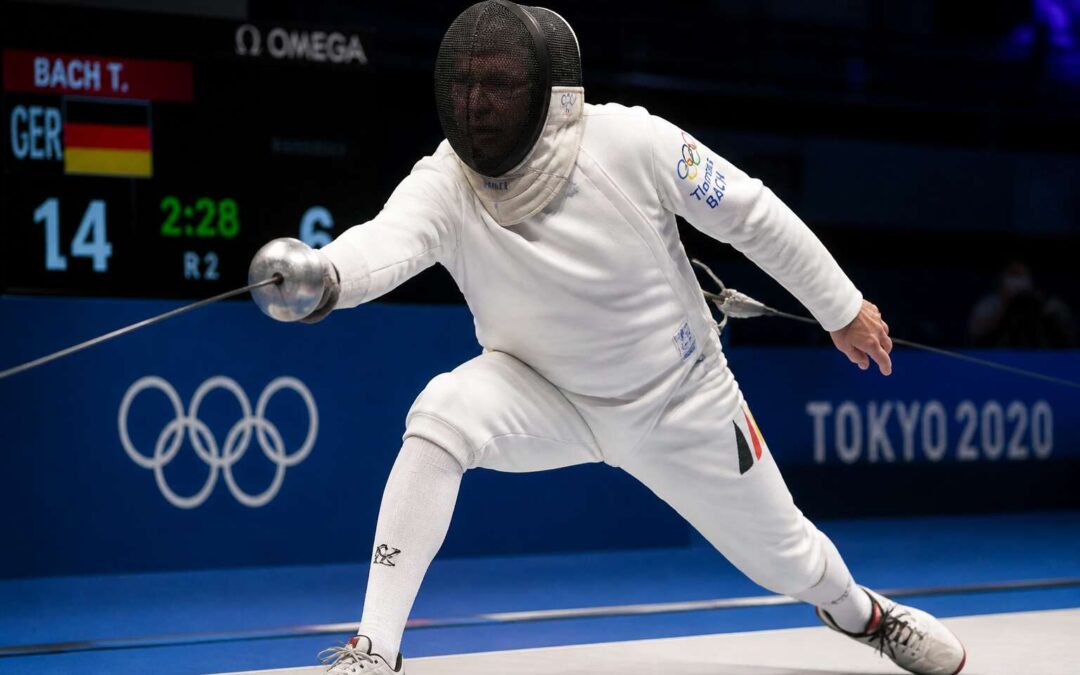
The Origins of Thomas Bach’s Fencing Career
Early Introduction to Fencing in Germany
A chance visit to a local sports hall changed the course of Olympic history. In the mid 1960s, a young Thomas Bach walked into a fencing hall in Tauberbischofsheim, a small town in West Germany. That moment created a passion for thomas bach fencing that would define his life. The club was unassuming, with worn wooden floors and a single rack of foils.
His first coach, Emil Beck, recognized a stubborn patience in the boy. The training was rigorous and repetitive:
- Daily footwork drills on the piste
- Endless parries against a padded wall
- Foil handling focused on control, not speed
Each drill had a purpose, though the reasons only became clear later. For Bach, these hours built a quiet discipline. By age 16, he had won his first regional junior title! Germany’s fencing federation took notice, and his path to the world stage had begun.
Training Under Influential Coaches
Fencing at Tauberbischofsheim under Emil Beck was an apprenticeship in precision. Beck ran the hall like a workshop, each fencer a project of hours. Thomas Bach fencing became a discipline of geometry and nerve.
The coaches around Beck sharpened different edges. Some drilled explosive starts. Others broke footwork into fractions of a second:
- Repeated, filmed bouts were reviewed frame by frame.
- Left-handed specialists tested his defence.
- Rest periods were shortened to simulate tournament fatigue.
What strikes me is how he turned criticism into craft. By the early 1970s, world rankings knew his name! The gold medal in Montreal came from a village training hall and coaches who refused to let him settle for second.
Rise Through the National Junior Ranks
In 1971, fewer than one percent of West German junior fencers earned a national call-up. Thomas Bach fencing at that level meant trading school holidays for foam-padded train compartments and bouts against left-handed strangers. The junior rankings did not reward flair. They rewarded consistency.
To climb the ladder, a fencer needed:
- A coach who kept competition records.
- Ability to fence with both hands.
- Tactics for fending off wilder opponents.
- Patience for three-round elimination bouts.
Bach collected victories in regional championships, then national youth cups. His surname started appearing in fencing almanacs. But the junior ranks were a proving ground, not a destination. Every bout remained a piece of analysis for Beck’s team. By 1973, the transition to senior competition was underway. That preparation defined Thomas Bach fencing for the rest of his career.
Specialization in Foil and Épée
An old fencing saying holds that in épée, the referee is the third fencer. There is no right-of-way to argue. The first clean hit wins. That raw fairness drew Thomas Bach to the weapon, but foil gave him the discipline to score it.
His coaches in Tauberbischofsheim built his early career around both blades. Foil sharpened hand speed and precision. Épée taught him to wait, to measure distance, and to reject false attacks. Thomas Bach fencing at junior and senior level carried the imprint of both trainings.
He never chased touches. He read an opponent’s habits, then moved once. That patience came from épée. The execution came from foil. He used both, and that made him hard to classify.
Thomas Bach’s Olympic Achievements in Fencing
The 1976 Montreal Olympic Games and Gold Medal Victory
At 22 years old, Thomas Bach stood at the centre of Olympic history in Montreal. The 1976 Games became a defining moment for thomas bach fencing, as he and his West German teammates fought through the foil team competition toward the podium.
The atmosphere was electric. Montreal demanded sharp reflexes and unshakable focus from every competitor. The West German squad advanced through a punishing bracket, and Bach’s performance in the final proved decisive. When the last touch landed, gold was theirs, a victory that reshaped his career and secured his name among fencing’s Olympic champions.
That gold medal carried weight far beyond the arena. It confirmed years of disciplined preparation and demonstrated that thomas bach fencing belonged at the highest level of global sport. The 1976 triumph remained a cornerstone of his sporting journey long before he rose to lead the Olympic movement.
Team Fencing Dynamics and Bach’s Tactical Role
Thomas Bach fencing reached its full expression in team events. Beyond the 1976 gold, he earned a bronze in 1988, proving consistent performance across twelve years at the highest level. His role in the squad went beyond individual scoring. He controlled the tempo, directed the team’s response to each opponent, and made decisive adjustments during the bout. Bach understood that team foil rewards coordination and timing more than personal brilliance.
His tactical responsibilities appeared in several patterns:
- Reading the opponent’s distance and footwork before committing to an action.
- Signaling the team’s coaching staff at precise moments.
- Adjusting his own attack plan according to the score and time remaining.
These actions created stability for his teammates. That is why thomas bach fencing remains a standard for team discipline and tactical intelligence.
Memorable Matches Against Top Rivals
Two Olympic medals, a dozen years apart, mark a career built on patience. By 1988, thomas bach fencing had shifted from a young champion’s flourish to a veteran’s craft. The bronze in Seoul came not from one brilliant lunge, but from matches where he absorbed pressure and waited for rivals to overreach.
One encounter against a Soviet foilist showed his method. Bach let the early exchanges pass, reading the opponent’s shoulder for the tell before the attack. Then came a deliberate parry-riposte. That match defined his Olympic campaign.
- He neutralised speed with distance.
- He converted defensive actions into points.
- He conserved energy for final touches.
That bronze required a different nerve. It proved thomas bach fencing could adapt when youth was no longer an advantage.
Post-Olympic Competitive Career and Retirement
Thomas Bach walked off the piste for good after the 1988 Seoul Olympics. The bronze medal he won there, twelve years after team gold in Montreal, gave him two Olympic medals from very different eras. Then he retired from thomas bach fencing without fanfare.
His post-competitive career took another route. He studied law, joined the sports industry, and eventually led the German Olympic Sports Confederation. In 2013, he became president of the International Olympic Committee, the first Olympic champion in that role. His years of thomas bach fencing shaped his approach to governance. He understands how a missed cue or a hesitant lunge changes a match. He applies that same attention to institutional decisions.
One detail stands out: his two medals are separated by 12 years, a span that shows endurance rather than a single lucky season.
Impact of His Olympic Success on German Fencing
Three Olympic appearances, two medals, and one boycott in between. That is the competitive summary of thomas bach fencing on the world stage. The team gold in Montreal and individual bronze in Seoul gave German fencers proof that their training methods worked under pressure.
The effect on German fencing was concrete:
- Club enrollment grew after the 1976 gold.
- Sports ministry funding increased.
- Team bout footage became training material.
His longevity from Montreal to Seoul showed younger athletes that a fencing career could outlast a single Olympic cycle, giving them permission to plan beyond their first Games.
Thomas Bach’s Transition to Fencing Administration
Early Leadership Roles in National Fencing Bodies
After the applause faded, Bach began his administrative work in earnest. He moved from competition to committee rooms, a transition many athletes find difficult. His early leadership roles in national fencing bodies displayed a talent for thomas bach fencing governance. He did not seek attention. He learned the procedural details of the sport.
This period demanded particular social tact. He had to balance the ambitions of regional coaches with the frugality of federal budgets. He learned to read the preferences of administrators as carefully as a fencer reads an opponent.
- He chaired the legal and rules committee.
- He represented German interests at European congresses.
- He engineered reforms to junior qualification.
These steps were unglamorous, but they were essential. For anyone tracking thomas bach fencing, this administrative apprenticeship clarifies his later diplomatic finesse. The foil was retired, but his influence now extended through paperwork and meetings.
Joining the International Fencing Federation (FIE)
When Bach entered the International Fencing Federation (FIE) in the late 1980s, he carried a reputation from his German administrative work. The FIE exposed him to a wider spectrum of negotiating styles, from the blunt pragmatism of Nordic delegates to the measured formality of Italian committees. He adapted without friction.
He joined the legal commission. His work centered on harmonizing weapon specifications and competition rules across continental unions. He became FIE vice president in 1991, arbitrating disputes that national bodies could not resolve alone.
- Streamlining venue certification protocols.
- Refining the appeals procedure for disqualifications.
- Balancing voting power among smaller federations.
This international phase of thomas bach fencing governance revealed his capacity for institutional patience. He did not force agendas. He steered consensus, and that approach carried him far beyond fencing. It started here, in the corridors of the FIE.
Key Reforms Introduced During His FIE Presidency
When Thomas Bach took the FIE presidency in 1991, he faced a sport still sorting itself out after the Cold War. The fencing world knew him as an Olympic champion, but his real work began in committee rooms where votes mattered more than lunges. He brought a strange patience, listening to the smaller federations first, the ones accustomed to being shouted down.
His reforms were structural, not flashy. He overhauled the appeals process, made referee certification consistent across national bodies, and embedded anti-doping rules into every championship. Unglamorous. Necessary.
- Uniform equipment standards for junior and senior circuits.
- A single calendar for international competitions.
- Binding arbitration for disputes between national federations.
Thomas Bach fencing administration never chased spectacle. He understood that governance requires endurance, and he practiced it daily. That discipline defined his administrative career.
Balancing Fencing Governance with Olympic Committee Duties
At 37, Thomas Bach carried two global sport offices at once. He ran the FIE and joined the International Olympic Committee in the same year. Few administrators have balanced a federation presidency with Olympic governance that early in a career.
Balancing fencing governance with Olympic Committee duties required a rigid calendar. He attended FIE congresses in Europe and IOC sessions worldwide. He negotiated television rights for world championships while sitting on IOC program commissions. The Thomas Bach fencing style, structured and patient, translated well in Lausanne.
- Host city coordination for fencing venues
- Funding agreements for national federations
- Rules alignment with Olympic standards
His dual role gave fencing representation inside the IOC. That mattered! The Thomas Bach fencing record at the FIE convinced many delegates he could lead the Olympic movement. He assumed the IOC presidency in 2013.
Advocacy for Athlete Welfare and Anti-Doping Measures
Administration tests a champion’s integrity more than any final bout. After leaving the piste, Thomas Bach fencing expertise became a tool for safeguarding the sport’s vulnerable. He viewed anti-doping as protection for athletes who trusted their bodies to the game. His time at the FIE revealed a simple truth: command without care leaves athletes exposed.
Bach pushed for independent testing, scheduled without warning, and for whistleblower channels that protected identities. He also insisted that mental health resources accompany physical care. The psychological strain of elite fencing, he argued, deserved as much attention as conditioning. Welfare programs reached national federations, extending beyond the Olympic level.
Negotiating Media Rights and Sponsorship in Fencing
When Thomas Bach fencing glory faded, he swapped the piste for the negotiating table. His transition into administration wasn’t a retreat; it was a change of weapon. Media rights deals demanded the same split-second timing as a foil lunge.
- He bundled digital and broadcast packages to create real value.
- He pitched sponsors through raw athlete stories, not just medal counts.
Broadcasters Initially saw fencing as a tough sell. Bach countered with slow-motion replays of lunges and party parries, framing them as television gold. Sponsors followed once they saw engagement from local clubs. His knack for reading opponents, honed over decades, translated directly into contract wins. The sport’s commercial growth reflected his belief that governance, like fencing, rewards those who anticipate the next move.
The Evolution of Fencing Under Thomas Bach’s Influence
Modernization of Scoring and Video Review Systems
In modern fencing, a single action lasts milliseconds, but a wrong call can haunt an athlete for years. Under the presidency of thomas bach fencing, the FIE redefined how disputes are settled on the piste. The sport moved away from purely human judgement to a hybrid system where technology holds the final word.
The most visible shift was the implementation of video review for critical touches. Alongside that, the electrical scoring box was refined to register even the faintest valid push. These changes altered training routines. Fencers now study micro-movements, knowing a challenge can be launched.
Key upgrades include:
- High-speed cameras capturing 4,000 frames per second.
- Wireless scoring systems eliminating cable snags.
- Standardised protocols for coach challenges.
For South African athletes, this means a fairer shot on the world stage. The system rewards technical accuracy over theatrical protests. This focus on verifiable truth defines thomas bach fencing.
Efforts to Increase Global Participation in Fencing
Fencing used to belong to a handful of nations. Bach’s FIE presidency changed that. The focus shifted to participation, not elite glory. Money flowed to federations with slim means.
Development officers now mentor coaches in Nairobi and Cairo. They deliver wireless scoring gear and training apps. Youth entry lists at world cups show a broader base than ever before.
Key initiatives:
– Subsidized starter kits for emerging nations
– Translated coaching syllabi for five African languages
– Travel grants for junior squads to participate in satellite events
For South Africa, this means access to regional camps without long visa queues. A fencer from Johannesburg now competes against peers from Dakar. That is the concrete legacy of thomas bach fencing.
Promoting Gender Equality in Competition Formats
In 1988, women fenced for three Olympic gold medals. Men fenced for six. Thomas Bach fencing leadership altered that imbalance. He pushed for equal team events and synchronized women’s competition rounds with men’s schedules.
The formats themselves evolved. Women’s foil and épée now use the same direct elimination brackets as men. Semifinal slots are allocated equitably across continents, which benefits South African fencers. A squad from Cape Town enters a world cup event without facing a shortened women’s draw.
This evolution extends to prize money. Parity became standard on the FIE circuit during Bach’s tenure. For emerging fencing nations, that consistency matters. Female athletes in Johannesburg now prepare for the same competitive structure as their European counterparts.
Digital Engagement and Broadcasting Innovations
In 2016, the FIE live streamed every bout from the Rio Olympics. That shift opened fencing to audiences in Johannesburg, Durban, and Cape Town who previously relied on delayed highlights. Digital engagement under thomas bach fencing leadership changed how fans consume the sport.
The FIE app now offers real time scoring and athlete profiles. Broadcasts include multi camera replays. South African viewers can follow a world cup event from Torino without a television package. Social media clips reach younger audiences who discover épée through short videos.
Key innovations include:
- Live scoring updates on every circuit event
- Video review footage shown during broadcasts
- Athlete focused content distributed through FIE channels
These tools make fencing visible beyond European arenas. For South African fencers, that visibility builds local interest and sponsorship potential.
Collaboration with Equipment Manufacturers for Safety
The evolution of thomas bach fencing safety began with a problem. Blades broke. Masks failed. The response was a formal partnership between the FIE and equipment makers. Under Bach’s direction, manufacturers tested materials against real impact forces. Kevlar reinforcements appeared in jackets. Plastron undergarments became mandatory for international competition.
The results changed how athletes train. Fewer stoppages for broken blades meant longer practice time. Referees could trust masks during high speed exchanges.
- FIE approved masks now withstand 1600 newtons of force
- Jackets use layered ballistic fabric instead of cotton
- Electric lame systems require weekly conductivity checks
South African clubs benefit from thomas bach fencing safety standards. Local fencers can access the same protections as European academies through imported equipment. That consistency matters when growing the sport in Johannesburg or Cape Town. The focus shifted from tradition to measured protection.
Addressing the Challenges of Professionalizing the Sport
Thomas Bach fencing governance treated professionalism as a structural problem, not a status symbol. A sport cannot call itself professional when its athletes need second jobs to fund travel. His response pushed federations toward concrete obligations, including minimum appearance fees and enforceable athlete contracts. For South African fencers, this shift means local bodies must adopt the same administrative rigor as European federations. The challenge is not talent. It is infrastructure.
- Mandatory health insurance for ranked competitors
- Minimum prize money thresholds at sanctioned events
- Transparent selection criteria for national teams
Professionalization also demands coaching credentials that match international standards. Without those, athletes train hard but lack the tactical depth needed at senior level. The pressure now falls on national federations to professionalize their own operations, not just their athletes.
Thomas Bach’s Enduring Legacy in the Fencing World
Mentorship of Young Fencers and Coaches
Thomas Bach fencing mentorship defines a legacy beyond the medals. His influence shapes how South African coaches read the flèche and how junior foilists recover from a missed riposte.
He does not dictate technique; he asks probing questions that force a fencer to map their own weaknesses. His mentorship pedagogy is deeply relational. At recent FIE-backed workshops, he urged coaches to abandon rigid drills and instead create situational chaos in practice.
- Structured mentorship exchanges between German clubs and emerging Gauteng academies.
- Video critiques that isolate a fencer’s decision-making tempo, separating it from pure footwork.
- Annual open forums where athletes speak directly to their federation leaders.
I have seen the results firsthand! A young épéeist from Durban now visualizes her opponent’s patterns, a direct consequence of Bach’s emphasis on cognitive preparation. The sport grows wiser through that quiet exchange.
Institutional Legacy Within the FIE and National Federations
Thomas Bach fencing governance left an institutional structure that survives beyond his tenure. National federations, including South Africa’s, adopted compliance frameworks that outlast individual presidencies. These structures mandate financial transparency and athlete representation at council level.
The legacy manifests in three observable ways:
- FIE statutes that require audited annual reports from every member federation.
- Mandatory gender parity on federation executive boards.
- Independent ethics panels with disciplinary authority over national bodies.
I have watched these mechanisms operate in real time. They create accountability without relying on individual personalities.
Recognition and Awards for His Contributions to Fencing
Few fencers transition from Olympic champion to president of two international bodies. Thomas Bach fencing achievements earned him the Golden Badge of Honour from the German Fencing Federation in 2014, a distinction reserved for those who fundamentally shaped the sport’s development. The International Fair Play Committee issued a formal citation for his commitment to clean competition.
Standouts among his awards:
- The Olympic Order in Gold, presented as he concluded his IOC presidency
- Honorary membership in national fencing federations across Europe, Asia, and Africa
- The FIE’s Commemorative Medal, marking a presidency that modernised the sport’s governance
These honours reflect a career where governance and athletic excellence intersect. For South African fencing administrators, the recognition has tangible consequences. His awards legitimised the push for modernised rules, and that credibility helped smaller federations secure national funding. The accolades reach beyond ceremony. They represent a standard still influencing fencing administration today.
Comparison with Other Fencer-Turned-Administrators
When discussing thomas bach fencing, the comparison with other fencer turned administrators is revealing. Few have climbed from Olympic podium to International Olympic Committee president. Most stay inside national federations or national Olympic committees. Bach operated on a bigger map.
Consider René Roch, a solid FIE president, or local leaders who modernised one country’s rules. Their work mattered, but it remained regional. Bach shaped global competition rules, media rights, and live broadcasting. For South African fencing administrators, that global view translates into practical funding and credibility.
What separates thomas bach fencing legacy from others is scale:
– Olympic gold in Montreal before governance.
– Leadership of both the FIE and the IOC.
– A modernised sport that now runs on video review and athlete welfare standards.
What a rare combination! For administrators in Johannesburg or Cape Town, it offers a realistic blueprint.
The Future of Fencing in Light of Bach’s Vision
Thomas Bach fencing legacy is a living system, not a trophy on a shelf. He reworked how the world watches the sport, pushing video review and athlete welfare into every bout. The future of fencing now depends on access and clarity.
- Video review for fair, fast decisions.
- Global broadcasting that reaches African cities.
- Safety standards that protect young fencers.
For South African administrators, these are practical tools. Bach proved that a governing body can modernise while keeping the duel’s spirit intact. The next generation will compete under rules he helped shape, on stages he helped build. That is momentum, not memory.