
Understanding the Basics of Precast Concrete Fencing
What Exactly Is Precast Concrete Fencing?
When you type ‘precast fencing near me’ into a search engine, you see dozens of suppliers. What they all sell is a system of concrete panels and posts cast in a factory, cured under controlled temperature, then trucked to your site. The concrete arrives ready to install, with no week of wet curing!
A standard kit consists of three elements:
- Reinforced posts that anchor into the ground
- Panels that slide or lock into the posts
- Capping pieces that seal the top edge
Because the concrete hardens before delivery, it develops a dense surface that resists moisture and impact. This is why precast fencing near me often appears when people search for durable boundary options. The uniformity from the mould means every panel matches, which matters when you are lining a large property.
Common Styles and Profiles Available in the Market
A 2023 local building survey put precast at roughly three quarters of all new perimeter walls in Gauteng. The preference is not mysterious. Stock-away panels present a smooth face to the street, while palisade profiles leave deliberate gaps for wind and visibility. The choice is one of temperament. Do you want to see the world or keep it at bay?
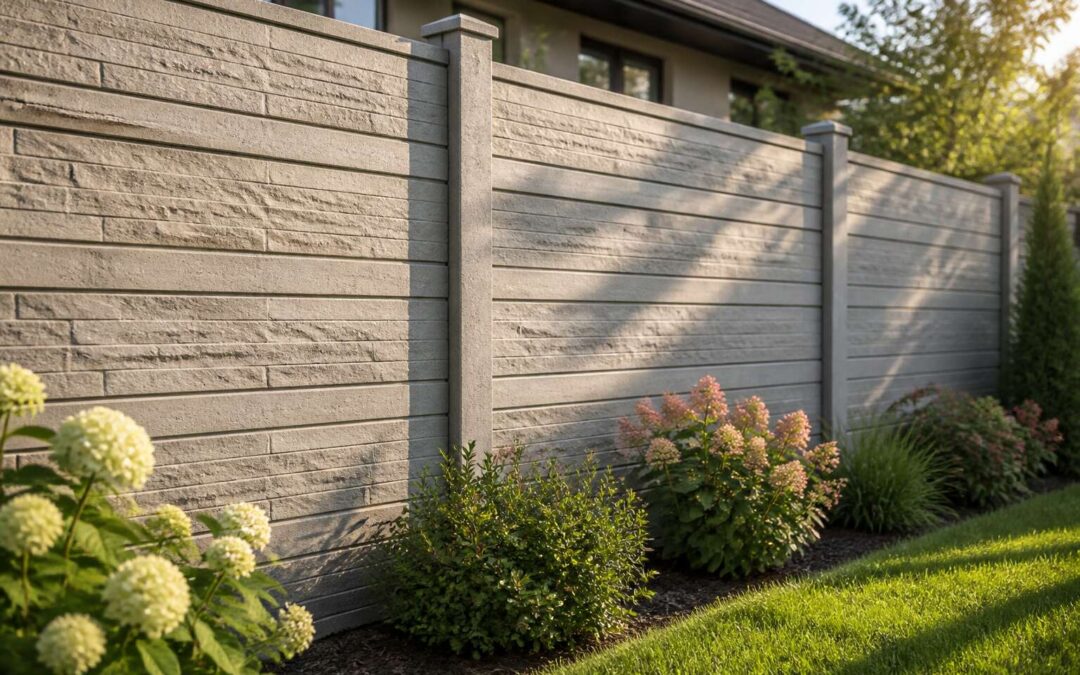
Manufacturers offer more than plain grey slabs, and precast fencing near me suppliers each carry their own pattern library. Some moulds imitate plastered brickwork, others produce a split-face texture that catches afternoon light. Even the capping varies: flat coping, half-round, or a peaked crown that sheds rain cleanly.
- Stock-away: flush surface, maximum privacy
- Palisade: vertical gaps, reduced wind load
- Decorative: patterned face, architectural interest
Searching precast fencing near me yields similar profile lists, but mould quality differs. A sharp-edged panel versus a rounded edge affects both durability and look. Matching the profile to your climate, neighbours and maintenance habits is the real skill.
Comparing Precast Fencing with Traditional Poured or Masonry Walls
Precast fencing near me often gets compared to poured walls, but the two are not the same. A poured wall is a wet construction process, dependent on formwork, curing time and weather. Precast arrives as a finished product, cured in a controlled yard, ready to be craned into place. That distinction changes the entire project timeline.
Masonry walls rely on skilled bricklaying and mortar joints that need periodic repointing. Precast panels use interlocking edges and steel reinforcement. The difference is visible in the finished line: precast offers a taut, uniform plane, while masonry shows the rhythm of individual units.
- Poured walls require on-site curing; precast is cured before delivery.
- Masonry depends on artisan labour; precast panels are factory consistent.
- Precast fencing near me suppliers deliver ready-to-install components.
For a homeowner, I see the practical consequence as fewer variables. The wall is engineered before it reaches your boundary, not improvised on site.
Typical Applications for Residential and Commercial Properties
Precast concrete fencing starts with a mould, steel reinforcement, and a controlled curing yard. The result is a panel that arrives on site ready to be lifted into place. No formwork, no waiting for concrete to set. That predictability matters when you search for precast fencing near me, because the product is consistent every time. I appreciate that consistency on a practical level.
For residential properties, these panels offer security and a clean boundary line. For commercial sites, they handle perimeter protection and noise reduction. Common uses include:
- Housing estates and individual stands
- Industrial yards and storage facilities
Each panel is engineered to stand independently, so the installation schedule stays short.
Why Property Owners Choose Precast Fencing
Superior Durability and Weather Resistance
The South African climate demands resilience. Heat, hail, and driving rain can crack lesser materials within a few seasons. Precast concrete is manufactured under controlled conditions, creating a dense structure that resists moisture. This means no swelling, warping, or rust, unlike timber or steel.
In my experience, property owners searching for precast fencing near me quickly see that this factory curing process extends a fence’s usable life. The concrete also resists UV degradation, so it avoids fading or becoming brittle under intense sun. Its weight and reinforced core handle high winds without shifting.
Consider these weather resistant features:
- Fire and termite resistance
- Zero maintenance for cracks or peeling
- Consistent performance through seasonal extremes
That durability is a structural guarantee, not a marketing claim!
Low Maintenance Requirements Over Time
A fence should never become a second job. Yet timber demands staining, steel invites rust, and masonry needs repointing. Homeowners who search for precast fencing near me are often escaping that cycle of endless upkeep.
Precast concrete panels arrive fully cured and ready to stand. They do not need sealing, painting, or chemical treatments. A simple rinse with water restores their original appearance. I have yet to meet an owner who misses scraping paint. That is the entire maintenance schedule.
Consider the practical savings:
- No repainting or re-staining, ever
- No rotting sections to replace
- No rust spots to grind away
Time is the hidden cost of any fence. Precast fencing near me gives owners their weekends back. The panels shed dirt easily, and the dense surface discourages moss growth. Even after a decade, the structure holds its profile without sagging or leaning. That quiet reliability is the real luxury.
Enhanced Security and Privacy Benefits
Crime reports in South Africa repeatedly identify perimeter weaknesses as the main entry point for intruders. That reality drives homeowners to search for precast fencing near me with a clear objective: a barrier that does not bend, flex, or offer handholds.
Precast concrete panels deliver security through sheer mass. Their density resists impact, and uninterrupted faces remove climbing points found on palisade or mesh systems. Installed panels form a continuous wall, hard to scale and harder to breach.
Privacy arrives as a natural consequence. Solid panels block sightlines entirely. Neighbours cannot see in, and passersby cannot gauge your movements. The same density dampens noise and deflects wind. Consider what these panels provide:
- Unbroken surfaces with no sightline gaps
- Dense panels that resist sustained force
- Secure, hidden fixings that prevent panel removal
For property owners, precast fencing near me means a perimeter that protects without demanding attention. The fence stands, and life behind it proceeds without interruption.
Aesthetic Versatility with Textures, Colors, and Finishes
Few elements define a property’s character quite like its boundary. The precast fencing near me has evolved beyond the flat grey slabs that once dominated South African suburbs, offering textures and finishes that carry their own quiet presence.
Concrete can mimic the stratification of natural stone or the long grain of aged timber. Pigments run through the material itself, so colour endures rather than flaking away like a superficial coat. Finishes vary widely:
- Exposed aggregate for a raw, mineral texture
- Brushed faces that soften the afternoon light
- Smooth, polished surfaces with a modern restraint
Some homeowners match panels to their home’s existing palette. Others let the fence stand in contrast, a darker counterpoint against pale walls. The boundary becomes deliberate. Its presence registers before the gate is even reached.
Soundproofing Qualities for Busy Neighborhoods
Traffic on a Johannesburg arterial often exceeds 70 decibels. That intrusive drone seeps into your yard, undermining the calm of your home. A seamless precast fencing near me panel changes this equation.
Precast fencing near me consists of dense, heavy sections. Unlike hollow timber or chain link, this mass does not vibrate. It absorbs the sound of engines and barking dogs before they reach your patio. Homes fronting busy roads see a measurable drop in incoming noise. When people call our company, they are usually done with that constant thrum. We have seen clients reclaim their afternoons simply by closing the gate behind them!
- Muffles passing traffic frequencies.
- Quiets chatter from neighbouring properties.
- Stops echoes bouncing off hard surfaces.
The panels fit tightly, leaving no gaps for sound leakage. For a neighbourhood bedevilled by late-night gunning or early-morning deliveries, this acoustic buffer is worth its weight in cement.
What to Look for in a Local Precast Fencing Contractor
Checking Manufacturer Certifications and Quality Standards
Choosing a contractor for precast fencing near me demands more than comparing quotes. The manufacturing process determines whether your boundary will endure decades of Highveld sun or coastal salt. I always ask for the supplier’s SABS certification and verify that their concrete mix meets the prescribed compression strength ratings. A reputable precaster will willingly share batch test results.
- Check for the SABS mark on the actual product
- Request the latest third party lab analysis
- Confirm curing time adherence
- Verify the quality of reinforcement steel
Walking through the factory floor reveals plenty. Watch how panels are handled and stored. Ask about their curing process, since rushed production creates invisible weaknesses. Some contractors source from multiple plants, which can compromise consistency from panel to panel. Insist on knowing exactly which facility produced your order.
Reading Customer Reviews and Requesting References
One negative review can outweigh twenty glowing ones. When I search for precast fencing near me, I read every comment, but I focus on patterns. Repeated mentions of late delivery or cracked panels demand attention. Then I request references from the last three jobs, not the ones the contractor picks. Hesitation on that request ends the conversation.
I contact those references and ask specific questions.
- Did the installation timeline match the quote?
- Were the panels uniform in color and texture?
- Did the crew clean up thoroughly?
Their answers beat any brochure. Local experience counts as well. A contractor who has worked in your area knows the soil and municipal rules. That familiarity makes the contractor a dependable choice when they have a proven track record close to home.
Evaluating Past Project Portfolios and On-Site Installations
When I search for precast fencing near me, I stop by completed projects rather than relying on showroom samples. A photo album can hide weathering over time, but an actual wall shows the truth: how the panels sit after rain, whether the joints align properly, and if the finish holds its colour under harsh South African sun.
During an on-site installation, I watch how the crew handles the concrete sections. Do they lift with care or let edges chip? Do they set each panel level, or do they force it into place? These details expose the craftsmanship behind the product.
- Check the base for consistent drainage gaps.
- Inspect the texture for air pockets or rough spots.
- Ask about foundation depth for that specific soil.
Trust only a contractor whose past work you have touched and examined. That direct inspection matters more than any promise.
Asking About Custom Design Capabilities and Mold Options
When I search for precast fencing near me, the conversation about custom design capabilities reveals how flexible a contractor truly is. Some suppliers work with a fixed set of molds and cannot deviate. Others maintain a toolroom where new patterns are developed on request.
Ask directly about mold ownership. A contractor who designs and stores their own molds can offer bespoke textures, colour blends, and panel dimensions. One who rents from a third party may be limited to whatever that supplier stocks.
Consider also:
– The minimum order quantity for custom molds
– Whether the quote includes mold development costs
– The lead time for a new pattern
These answers separate a genuine fabricator from a middleman. That distinction matters when your property needs a specific finish.
Confirming Warranty Coverage and After-Sales Support
A warranty means little if the fine print hides more than it covers. When I search for precast fencing near me, I look for contractors who explain their terms without hesitation. A robust warranty should address structural cracking, spalling, and discolouration over a defined period. It should also state clearly whether the coverage applies to labour or only materials.
After-sales support is the quieter measure of a contractor’s integrity. The best suppliers keep records of every installation and maintain a stock of matching panels. They know that a fence will face hard weather and occasional impact, and they prepare for that reality.
Key points to verify in writing:
– The warranty duration for structural and cosmetic issues
– Whether the contractor or the manufacturer backs the guarantee
– The response time for warranty claims
– The process if a panel needs replacement after installation
Ask for the warranty document before you commit. A contractor who hesitates to share it is telling you something important.
Getting Multiple Quotes for Transparent Pricing
Nobody wants to discover halfway through a project that the cheapest quote was missing the foundation work. When I search for precast fencing near me, I read every price estimate with suspicion. A contractor who quotes a single lump sum without itemising materials, delivery, and installation is hiding something, and the difference can run to thousands of rand.
A transparent quote should spell out exactly what you are paying for:
- Per panel and post pricing
- Transport and offloading fees
- Excavation and footing preparation
- Installation labour and finishing
Request at least three quotes from different contractors. Compare the line items, not the totals. Site conditions like rocky soil or waterlogged ground shift costs dramatically, so ask each contractor how those factors influence their numbers. Their answers reveal more than the price ever will.
Step-by-Step Guide to the Installation Process
Assessing Site Conditions and Property Boundaries
A precise boundary line is the quiet foundation of any fence. Before a single panel arrives, I walk the full perimeter with the title deed and a measuring wheel. That simple act reveals encroachments, hidden slopes, or overgrown markers that would otherwise distort the installation.
- Confirm surveyor pegs against the registered diagram.
- Test soil drainage near each post position.
- Map underground cables and water pipes.
For precast fencing near me, the ground condition matters more than most homeowners assume. Loose sand or expansive clay demands deeper footings and different edge details. I also check the fall of the land so water never pools against the panels, because that silent pressure eventually shifts any structure.
Preparing the Ground and Concrete Footings
The real work starts with the ground. After the boundary is confirmed, I mark each post position and begin excavation. For precast fencing near me, the footing depth depends on the soil’s load bearing capacity. Sandy coastal ground demands more depth than compacted inland clay, and the difference shows up within the first rainy season.
I set up formwork and pour the concrete in one continuous operation. The panels rely on these footings for alignment, so any interruption in the pour creates a weak seam. I compact the base material in layers before the concrete ever touches it.
- Excavate to the specified depth, usually 600mm for residential panels.
- Compact the base before adding any concrete.
- Check the string line after each post footing is placed.
Curing takes time. I keep the concrete moist for at least three days before the panels are mounted. Skipping this step leads to hairline cracks that appear months later. A properly cured footing is what separates a lasting precast fencing near me installation from one that shifts within a year.
Placing and Securing the Precast Panels
The first panel is always the hardest. I guide it into the cured footings with a lifting clamp, checking the rebate for debris before it settles. A single grain of stone trapped underneath will throw the entire run out of plumb. Once seated, I brace it temporarily and move to the next one.
Each successive panel locks into the previous one’s groove, which is where the precision matters. I use a rubber mallet to nudge the concrete into alignment, never a crowbar. Steel reinforcement bars get threaded through the preformed holes and grouted in place, creating a continuous structural bond.
- Set the panel vertically and check both faces with a spirit level.
- Insert the rebar dowels before the grout begins to set.
- Pack the joints firmly to prevent moisture ingress.
The grout cures slower than the footing did, and I let it sit overnight before removing any braces. Rushing this phase is how panels end up leaning. A proper precast fencing near me installation looks effortless from the street, but the real work happens in these quiet hours between placements.
Finishing Touches: Capping, Sealing, and Cleanup
With the grout cured and braces removed, the finishing phase begins. I start with capping. Each concrete cap goes down on a thin mortar bed, pressed until it sits perfectly flush. A loose cap traps water, and trapped water becomes freeze damage over winter.
Sealing comes next. I apply polyurethane sealant along every panel joint and cap seam, working the nozzle slowly to avoid air pockets. This step matters more than most people assume. Moisture finds the smallest gap and follows it straight into the steel reinforcement.
Cleanup is straightforward but urgent. Excess grout wipes away with a damp sponge while fresh. Dried splashes require a dilute acid wash. I rinse thoroughly afterward to prevent staining. When homeowners search for precast fencing near me, they see a clean wall. What they don’t see is the sealant bead and the capped top, both holding the line.
Understanding the Cost Factors for Your Fencing Project
Price Breakdown: Materials, Delivery, and Labor
Quotes for the same fence line can swing by 40% between suppliers in Gauteng alone. I have seen this firsthand, and the difference comes down to three factors.
- Raw materials: concrete grade, steel reinforcement, and pigment.
- Delivery: distance from the factory to your boundary.
- Labor: site prep, footing digging, and crew time.
Materials dominate the invoice. Higher cement ratios cost more upfront but resist spalling in highveld weather. Delivery charges often surprise buyers. A precast fencing near me search may return factories far from your plot, and transport fees climb sharply beyond 50 kilometres. Labor is the most variable line. Rocky ground, steep slopes, or clay soils slow the work and inflate the hours. Ask each supplier to itemise these three costs separately. That clarity is the only way to compare prices fairly.
How Property Terrain and Accessibility Affect Quotes
Terrain shapes your quote beyond the brochure price. A gentle slope may cost the same as a flat boundary, but a 15 degree incline adds stepped footings and crane time. Rocky ground demands jackhammers; clay soils need deeper foundations to resist shifting after rain.
Accessibility is the silent variable. If a delivery truck cannot reach the boundary, panels are hand-carried, adding hours. A precast fencing near me search surfaces close factories, yet estimates still differ based on gate width, garden condition, and machinery access.
Site factors that move estimates:
- Slope gradient and soil composition
- Distance from the drop-off point to the fence line
- Width of access gates and turning radius for vehicles
- Overhanging trees or structures along the route
Additional Expenses for Gates, Corner Pieces, or Custom Designs
Your precast fencing near me quote might look reasonable until you mention the word “gate.” Then the calculator starts sweating. A standard panel is a rectangle. A gate is a moving rectangle with hinges, latches, and the audacity to expect a smooth opening. Custom designs, like curved tops or decorative inserts, also add costs, but the price reflects extra mold work and craftsmanship.
Corner pieces are another overlooked line item. They require precise angles and additional support, so charging for them is fair, if annoying. Remember that every castellation, post cap, and special color option accumulates, much like a troll toll. If you order a precast fencing near me solution with a remote-controlled gate, expect the quote to leap.
- Gates with automation and interlock systems
- Corner posts and angled panels
- Custom textures or embossed patterns
- Special finishes, such as exposed aggregate
Ask for a detailed breakdown before ordering, because surprise fees are the worst fence neighbors you can invite.
Comparing Long-Term Value Versus Upfront Investment
The initial outlay for precast fencing near me often makes homeowners wince. I get it. That cash seems steep today. But look at the ledger over a decade, not a single week. A cheap timber barrier needs painting, repairs, and eventual replacement. Precast concrete asks for almost nothing.
Compare the cost per year of ownership. The upfront investment buys a permanent asset. It resists highveld storms and coastal salt effectively. Your grandchildren might still find the panels standing.
- Timber fence lifespan: 5 to 10 years
- Chain link lifespan: 15 to 20 years
- Precast concrete lifespan: 50 years or more
That is the real math! The quote for precast fencing near me is not an expense. It is an investment in the property itself, paid once.
Tips for Maintaining and Extending the Life of Your Fence
Routine Cleaning and Inspection Schedules
Routine cleaning for precast fencing near me is simpler than most property owners expect. A soft brush and mild detergent every few months removes dust, pollen, and urban grime before it settles into the surface texture. Pay attention to the base where moisture lingers after rain.
Inspect panels twice a year, ideally after the windy season and again before summer storms. Walk the full perimeter and look for hairline cracks, shifting joints, or drainage issues behind the fence line.
Check these points during each inspection:
– Drainage gaps at the base
– Sealant condition around caps
– Tightness of gate hardware
– Signs of efflorescence on panel faces
Catching small concerns early prevents costly repairs later, and the rhythm becomes second nature for any owner of precast fencing near me.
Dealing with Minor Cracks, Chips, or Efflorescence
Minor cracks and chips are part of the normal wear on any wall, and precast fencing near me is no different. The trick is to address them before water gets in. For hairline cracks, use a flexible concrete filler and smooth it with a putty knife. Chips larger than a coin might need a patching compound that matches the original finish.
Efflorescence, that white powder on the surface, looks worse than it is! It is simply mineral salts brought to the surface by moisture. A stiff brush and a diluted vinegar solution usually lifts it. If it returns, check the drainage at the base.
Here are some practical pointers for minor repairs:
– Use a diamond blade for clean edges before patching.
– Apply a penetrating sealer after repairs.
– Always test the cleaning solution on a hidden spot first.
Sealing the repair area keeps moisture out and prevents the problem from spreading. With these small actions, your precast fencing near me stays solid for decades.
Preventing Water Damage and Drainage Issues
Water is the quiet enemy of every boundary. A fence can stand for years, then fall to a single season of poor drainage. The soil tells the story. When rain pools at the base of a precast concrete panel, the ground softens. The footing shifts. Cracks appear, not from impact, but from the slow, persistent pressure of waterlogged earth. I have seen it happen. The fix is not complicated, but it requires attention before the damage begins.
The ground around your fence should slope away from the panels. A gradient of even a few degrees makes a difference. If water collects in low spots, the base of the fence will absorb moisture over time. This weakens the structural integrity. You can test this yourself after a heavy rain. Walk the line and look for puddles. If you find them, add soil or gravel to encourage runoff. Do not let the problem wait.
Another consideration is the top of the fence. Precast fencing near me often includes capping, and that capping is not decorative. It serves a purpose. The cap directs water away from the panel face. If the cap is cracked or missing, water will seep into the core of the concrete. Over time, this internal moisture can cause the steel reinforcement to rust. The rust expands, and the concrete spalls from the inside. That is a failure you cannot patch easily.
Drainage at the base is equally important. A gravel trench along the footing can move water away from the fence line. Some property owners plant grass or shrubs right up against the panels. This looks pleasant, but the roots and watering systems can trap moisture against the concrete. Keep the base clear. Allow air to circulate. The concrete needs to breathe.
– Inspect the drainage path twice a year, especially before the rainy season.
– Clear any debris that blocks the flow of water away from the fence.
– Check the capping for cracks and seal them promptly.
– Avoid watering plants directly against the panels.
These are not complex tasks. They take an hour of your time, but they extend the life of your boundary by decades. The fence is a form of protection, and protection requires vigilance. Do not wait for the cracks to appear before you act. By then, the water has already done its work.
When to Call a Professional for Repairs or Replacement
Even the best precast fencing near me requires a watchful eye. I learned this after noticing a panel that had shifted a few millimeters following a dry season. That small gap told me the ground beneath was moving. Catching it early saved me from a full replacement.
When should you stop doing it yourself? If you see a panel leaning, or if the alignment between sections changes, call a professional. Cracks wider than a hairline are a red flag. So are gates that suddenly drag on the ground.
– Listen for unusual sounds when the wind blows.
– Look for uneven settlement after heavy rains.
– Check the metal fixings for rust or looseness.
These signs suggest the structural load has changed. A professional with the right tools can re-level panels and re-seat footings. Doing it alone risks making the problem worse.