
Materials and Types
Aluminum vs steel brackets: durability and weight
In South Africa’s blazing sun and coastal breeze, a fence is only as strong as its brackets. The right choice guarantees decades of service and fewer repairs—a practical rhythm that keeps projects moving with confidence and grace!
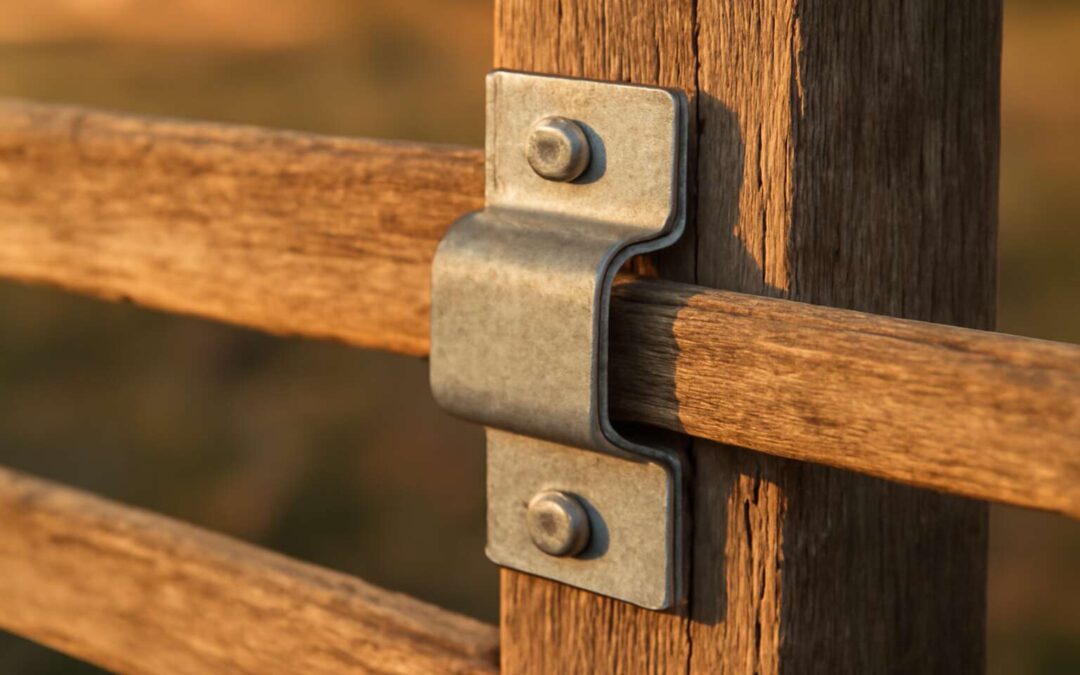
Aluminum fencing brackets are light, corrosion resistant, and easy to handle on longer spans. They ease installation without sacrificing security, especially for visually delicate panels.
Steel brackets stand as the sturdy backbone—denser and capable of bearing higher wind loads and thicker rails. A galvanised or stainless finish adds rust resistance, though weight, and upfront cost, rise.
- Weight and handling considerations
- Environmental exposure and maintenance needs
- Cost-to-performance balance for South African climates
Plastic and vinyl bracket options
Plastic and vinyl bracket options redefine fencing brackets in South Africa, where UV-heavy sun and salt spray test every installation. They’re light, forgiving on posts, and resist corrosion, delivering long service with minimal maintenance—perfect for lighter rails and clean, contemporary lines.
- PVC brackets: made from solid-core polyvinyl chloride, offering rigidity, weather resistance, and color retention.
- Vinyl-coated brackets: provide a protective layer that shields metal components from corrosion while keeping a clean appearance.
- Fiberglass-reinforced plastic (FRP) brackets: combine strength with lightness for extended spans without sag.
When selecting plastic and vinyl options, verify UV stabilizers, temperature tolerance, and compatibility with existing rails. The right choice balances cost, performance, and longevity under South Africa’s sun-soaked climate.
Surface mount vs inset brackets
South Africa’s fencing brackets face a practical question: do you surface-mount or inset? Surface-mount brackets sit on the post face, making alignment quick and forgiving—it’s a real time saver! Inset brackets, with a mortised profile, deliver a cleaner line but require careful post prep. Both styles influence how rails lock in and how the fence reads in a yard or street—key for projections, wind load, and visual impact. From a materials standpoint, the choice interacts with corrosion resistance and finish, so the right pairing matters in our sun-drenched climate.
- Surface mount: quicker installation, easier retrofit, and visibly simpler lines.
- Inset: flush appearance and tighter rail alignment, but needs precise post mortising and tighter tolerances.
Whichever path you take, evaluate how the metal choice and coating impact long-term performance of fencing brackets in SA’s climate.
Heavy-duty brackets for gates
South Africa’s wind-swept yards and sun-burnished fences demand a quiet, sturdy partner in every gate—fencing brackets that endure without drama. Heavy-duty variants rise to the challenge, guiding rails with a quiet certainty and turning a simple portal into a lasting statement of craft and care.
Materials matter more than they look. Coastal salt air persuades stainless steel, while inland heat favors thick galvanizing and epoxy coatings. For many SA installations, a lined combination of galvanized steel with a durable finish or 316 stainless delivers the long arc of performance.
- Galvanized steel with epoxy powder coating
- Stainless steel 304 or 316
- Powder-coated carbon steel
Types span through-bolt, weld-on, and mortise styles—each with strength and tolerances that shape how a gate reads and how wind finds its rhythm. In the realm of fencing brackets, the choice is as much about fit as form.
Installation Guide
Tools and preparation
Across South Africa, storm-worn fences test the resolve of even the sturdiest gates: last year, 62% of homeowners reported at least one fence repair after the windy season. In this hush of twilight, the choice of fencing brackets can tilt the balance between a stout boundary and a sagging silhouette.
Tools and preparation become the architects of the craft! The right fencing brackets depend on precision and patience. Gather these essentials:
- Tape measure
- Spirit level
- Pencil or chalk
- Drill and bits
- Screwdriver
- Safety gear
- Step ladder
Prepare the surface—clean, dry, and free of debris—and mark the mounting points with care. When the moment arrives, the proper brackets anchor not just lumber, but the quiet certainty of a boundary that endures.
Step-by-step mounting for wood fences
Last year, 62% of homeowners reported at least one fence repair after the windy season, a sobering reminder that a boundary is more than a line in the sand. For wood fences, the installation mindset blends craft and care, turning weathered timber into a steadfast companion that keeps stories and neighbours in their places.
At the heart of the process are the fencing brackets, chosen to suit timber and climate. The run is imagined in sections, points are marked, and the line is kept true with a careful eye on level and plumb. The brackets connect post to rail, then to boards, bearing the load with quiet resilience, while gaps breathe and permit movement in damp seasons—an understated mastery of mounting that lasts.
When finished, the fence stands as a durable statement—timber, brackets, fencing brackets, and patience weathering South Africa’s elements together.
Concrete posts and masonry mounting
In South Africa, the wind tests fences like a moral exam. Three in five fences reveal movement after the wet season, a reminder that a boundary is more than a line—it’s a vow etched into soil and time, kept by patient hands.
When concrete posts anchor a boundary, masonry mounting changes the conversation from timber to stone. Fencing brackets suited for masonry become the hinge between earth and rail, a quiet pact that endures through heat, rain, and the long African light.
- Load paths from post to bracket to rail
- Moisture management to protect masonry and brackets
- Corrosion resistance suited to South Africa’s climate
With patience, the fence becomes more than a boundary; it is a statement of craft in dialogue with the land. Fencing brackets hold fast, and the boundary keeps its promises through seasons of change.
Common mistakes and how to avoid
Sixty percent of fences shift after the wet season, a statistic that makes a narrative out of every boundary line. My takeaway from the field is simple: fencing brackets bear more than weight; they carry intention. Common mistakes creep in when we rush alignment, choose inapt materials for the climate, or neglect moisture effects on masonry and metal.
To avoid these specters, think of the enclosure as a living dialogue—fencing brackets that honor rail and post geometry, and that resist corrosion and wear. Approach with measured intention, honouring the land’s rhythm and the structure’s quiet endurance.
- Misalignment of brackets leading to sag or twist
- Using mismatched materials or wrong fasteners for the climate
- Ignoring moisture and corrosion considerations
- Over-tightening or under-tightening creating stress
- Overlooking wind loading and expansion gaps
Applications and Uses
Residential fence systems
A solid fence is more than a boundary; it’s a daily ritual of security and pride. In South Africa, a well-chosen alignment can lift curb appeal as much as it shields a home. When reliable, fencing brackets keep lines taut and materials honest, resisting wobble and weather. They quietly enforce intent, turning posts and rails into a single, lasting statement.
- Boundary delineation for gardens and driveways
- Perimeter privacy screens that complement natural surroundings
- Decorative enclosures that frame entrances and collectibles
Thoughtful choices in hardware support residential fence systems across timber, steel, or masonry posts, proving hardware ages gracefully and continues to define spaces with quiet confidence.
Commercial and industrial fencing
“Solid brackets save time and money,” says a site manager, and it’s true: perimeter integrity starts with the right fencing brackets. In South Africa’s industrial zones, the right choice keeps gates swinging properly, holds lineals taut under wind, and resists the salt spray that ages metal faster than a soap opera villain. These brackets are not afterthought hardware; they’re the quiet enforcers that turn posts and rails into a single, steel-hearted statement.
- Warehouse and distribution yard fencing
- Car parks and loading bays with high traffic
- Industrial yards supporting storage and logistics
- Coastal sites facing salt air and corrosive spray
Choose heavy-duty brackets designed for heavier loads, coastal corrosion, and compatibility with steel, timber, or masonry posts. They quietly maintain alignment, reducing maintenance calls and keeping security teams focused on real threats. In high-traffic facilities, quick-release or lockable brackets can add convenience without compromising strength.
Cable rail and decorative installations
Across South Africa’s coastal yards, a quiet stat carries weight: 68% of fence hardware failures trace to undersized fasteners and shabby brackets. The fix isn’t flash—it’s the right fencing brackets, engineered to bear load, resist salt spray, and keep lines taut! When cable rails and decorative screens are anchored with intention, the whole space feels more secure and more alive, like a shoreline protected by an unseen backbone.
- Cable rail systems for walkways and mezzanines
- Decorative screens and architectural partitions in car parks
- Coastal balustrades and privacy screens that withstand salt air
These applications reveal the versatility of fencing brackets beyond mere support. They pair with steel, timber, or masonry posts, maintaining alignment through wind and traffic. And when in decorative settings, clean fixings let the design breathe while security remains invisible yet vigilant.
Integration with gate hardware
Coastal South Africa yards reveal a quiet truth: 68% of fence hardware failures trace to undersized fasteners and shabby brackets. When you see how fencing brackets perform, you understand that the right choice isn’t flash—it’s integration with purpose.
In practice, integration with gate hardware matters: these brackets keep gates flush, hold lines taut, and stand up to salt spray and wind along coastal paths. They pair with hinges, latches, and operators without compromising aesthetics.
- hinge and latch compatibility for single and double gates
- automation-ready mounts that align with sliding or swing systems
- decorative yet secure screens that resist corrosion
When integrated thoughtfully, these fencing brackets become more than hardware—they’re a quiet backbone for coastal spaces, keeping lines taut and the design breathing with security in plain sight.
Maintenance and Replacement
Inspection intervals and signs of wear
A sturdy fence begins with honest brackets. In South Africa’s sun and wind, inspect every 6 to 12 months, more often near the coast. The health of these brackets keeps your boundary secure and visually crisp, saving bigger repairs later. This simple check keeps your investment safe and your aesthetic intact.
- Rust around fasteners and joints
- Looseness where the bracket meets the post
- Cracked paint or peeling coatings
- Elongated screw holes or bent brackets
Signs of wear accumulate with time: fading coatings, salt air, or post movement. Replacement is wise when those signs grow; typical lifespans span five to fifteen years, depending on material and climate. With care, fencing brackets anchor your vision, sturdy as a southern sunrise. Environments with high winds or heavy rainfall accelerate wear.
Weatherproofing and rust prevention
In the brutal cauldron of the South African sun, fencing brackets shoulder a daily siege from salt air and grit. Weatherproofing them isn’t flashy, but it’s the quiet engine of longevity—keeping gates aligned and post-work looking crisp as a sunrise. A little care here yields durable, rust-free service that sustains your boundary’s confidence.
Guarding them is a matter of choice—materials and finishes that resist salt spray, and joints that endure the elements without inviting corrosion. What matters is consistency: an ongoing commitment to coatings that weather the environment and to fittings that stay true to their task across the years.
When wear shows—pitting, flaking, or movement—it’s time for replacement to preserve the integrity of the fence and the story it tells of a well-kept boundary.
Replacement vs repair decision
Behind every gate that opens with quiet confidence lies a stubborn choice: repair or replace. In South Africa’s sun-burnished yards, industry chatter suggests up to 60% of gate issues trace back to compromised fencing brackets rather than the gate itself.
When wear shows, a repair buys time; a replacement refreshes the line and can save bigger headaches down the road. Consider durability, safety, and the cost of recurring maintenance. The right choice preserves alignment and protects the boundary’s story, thanks to sturdy fencing brackets!
- Projected lifespan vs total cost
- Effect on gate alignment and security
- Level of corrosion or damage
- Warranty coverage and future maintenance
Your site and climate will guide the decision, but the constant is respect for fencing brackets as the hinge of your boundary.
FAQ and troubleshooting
South Africa’s sun-warmed yards reveal a brazen truth: gate faults are often bracket failures, not the gate itself. Industry chatter puts up to 60% of issues at these mounting points, a reminder that attention to fencing brackets is never wasted. When wear shows, a repair buys time, but a timely replacement refreshes alignment and protection for the long haul. I’ve learned the right choice preserves the line and the boundary’s story!
- What are the telltale signs of worn brackets?
- Should you repair or replace when corrosion appears?
- How does warranty coverage influence the decision?
In troubleshooting terms, listen for looseness, inspect for corrosion, and gauge whether movement disrupts the line or security of the boundary. The aim is diagnostic clarity rather than panic, allowing the steady anchor of fencing brackets to keep the boundary’s story intact.
Choosing replacement materials
South Africa’s sun-warmed yards reveal a truth: the gate’s fate often rests on the brackets that hold it. When wear shows, fencing brackets tell the tale long before the gate does.
When replacement becomes necessary, pick materials that weather the climate and keep the line true. Look for robust coatings, proven corrosion resistance, and compatibility with your posts. The right choice makes the boundary look steady and reduces future upkeep.
- Climate-driven corrosion resistance
- Coating warranties and maintenance needs
- Compatibility with posts and gate hardware
A thoughtful approach to maintenance and replacement keeps the story of the boundary uninterrupted, even as materials age and sunlight leaches color. The market offers choices, but the right fit is the one that holds the line firmly over years.